

Every common side effect, side by side
The table lists each reaction the four weight-management labels report as common — at least 2% of people, and more often than on placebo. The placebo column is not decoration: people on dummy injections reported nausea, headaches and tiredness too, and the difference between the two numbers is the part the medicine is responsible for.
| Reaction | Semaglutide 2.4 mg injection | Tirzepatide injection | Liraglutide 3 mg injection | Orforglipron tablet |
|---|---|---|---|---|
| Nausea | 44% (placebo 16%) | 25–29% (placebo 8%) | 39.3% (placebo 13.8%) | 26–35% (placebo 10%) |
| Diarrhoea | 30% (placebo 16%) | 19–23% (placebo 8%) | 20.9% (placebo 9.9%) | 21–25% (placebo 11%) |
| Vomiting | 24% (placebo 6%) | 8–13% (placebo 2%) | 15.7% (placebo 3.9%) | 13–24% (placebo 4%) |
| Constipation | 24% (placebo 11%) | 11–17% (placebo 5%) | 19.4% (placebo 8.5%) | 20–27% (placebo 9%) |
| Abdominal pain | 20% (placebo 10%) | 9–10% (placebo 5%) | 5.4% (placebo 3.1%) | 13–14% (placebo 7%) |
| Indigestion (dyspepsia) | 9% (placebo 3%) | 9–10% (placebo 4%) | 9.6% (placebo 2.7%) | 12–16% (placebo 4%) |
| Headache | 14% (placebo 10%) | not listed | 13.6% (placebo 12.6%) | 8–9% (placebo 7%) |
| Tiredness (fatigue) | 11% (placebo 5%) | 5–7% (placebo 3%) | 7.5% (placebo 4.6%) | 6–9% (placebo 4%) |
| Dizziness | 8% (placebo 4%) | 4–5% (placebo 2%) | 6.9% (placebo 5%) | not listed |
| Bloating (abdominal distension) | 7% (placebo 5%) | 3–4% (placebo 2%) | 4.5% (placebo 3%) | 7–9% (placebo 3%) |
| Burping (eructation) | 7% (placebo <1%) | 4–5% (placebo 1%) | 4.5% (placebo <1%) | 6–8% (placebo 1%) |
| Wind (flatulence) | 6% (placebo 4%) | 3–4% (placebo 2%) | 4% (placebo 2.5%) | 5–6% (placebo 2%) |
| Reflux (GERD) | 5% (placebo 3%) | 4–5% (placebo 2%) | 4.7% (placebo 1.7%) | 6–7% (placebo 2%) |
| Hair loss | 3% (placebo 1%) | 4–5% (placebo 1%) | not listed | 4–5% (placebo 2%) |
| Injection-site reactions | not listed | 6–8% (placebo 2%) | 13.9% (placebo 10.5%) | not listed |
A few things the table does not show. The type 2 diabetes versions of these medicines, used at lower doses, report the same reactions at lower rates.34 A higher 7.2 mg dose of semaglutide recorded an additional signal — altered skin sensation, or dysaesthesia, in 22% of people against 6% on 2.4 mg.1 And the labels measure whether something was reported at least once during the trial, not how long it lasted or how much it bothered anyone.
The gut: where most of it happens
These medicines slow the rate at which the stomach empties, and they act on appetite centres in the brain.1 Both effects are part of how they work, and both explain why the gastrointestinal tract carries most of the side effects. Each has its own guide:
- Nausea — the most common single reaction, reported by up to 44% of people in the trials.
- Constipation — up to 27%, and the one most likely to creep up quietly.
- Diarrhoea — up to 30%, and the one most tied to dehydration.
- Heartburn, reflux and indigestion — indigestion in up to 16% on orforglipron.
- Burping and "sulphur burps" — burping in 4% to 8%, against about 1% on placebo.
- Bloating and wind.
For most people these are mild or moderate. In the orforglipron trials, of the people with a gastrointestinal reaction, 60% rated it mild, 36% moderate and 4% severe.5 They are still the commonest reason people stop: in the semaglutide 2.4 mg trials, 4.3% of people stopped because of a gastrointestinal reaction, against 0.7% on placebo.1
Beyond the gut
A second group of common reactions is less obvious:
- Tiredness — 11% on semaglutide 2.4 mg against 5% on placebo. The liraglutide label notes that tiredness, weakness and dizziness were mostly reported in the first 12 weeks, often alongside gastrointestinal symptoms.16
- Headache — 14% against 10% on semaglutide 2.4 mg.1
- Dizziness and low blood pressure — dizziness in 8% against 4% on semaglutide 2.4 mg; hypotension more often in people also taking blood-pressure medicines.12
- Hair loss — 3% to 5% overall, and much more often reported by women than men; the labels associate it with weight reduction.125
- Injection-site reactions — redness, itching or a lump where the injection went in; 6% to 8% on tirzepatide against 2% on placebo.2
- Tingling or skin sensitivity — rare at most doses, but 22% on semaglutide 7.2 mg.1
Heart rate also rises a little on average — by 1 to 4 beats per minute on semaglutide and 4 to 5 on orforglipron — and the labels ask people to report palpitations or a racing heartbeat at rest.15
Serious but uncommon: the warnings
Every GLP-1 label carries a section of warnings and precautions. These reactions are uncommon, but they are the ones the labels tell patients to act on quickly:125
| Warning | What to look out for | How often, where reported |
|---|---|---|
| Acute pancreatitis | Severe stomach pain that will not go away, sometimes through to the back, with or without vomiting | Semaglutide 0.2 cases per 100 patient-years vs under 0.1 on placebo; orforglipron 0.14 vs 0.04 |
| Gallbladder disease | Pain in the upper stomach, fever, yellowing of the skin or eyes, clay-coloured stools | Gallstones 1.6% vs 0.7% (semaglutide injection); cholecystitis 0.7% vs 0.2% (tirzepatide) |
| Dehydration and kidney injury | Vomiting or diarrhoea that will not stop; drinking less than you lose | Acute kidney injury 0.5% vs 0.2% (tirzepatide) |
| Severe gastrointestinal reactions | Stomach problems that are severe or will not go away | Severe GI reactions 4.1% vs 0.9% (semaglutide injection) |
| Serious allergic reactions | Swelling of the face, lips, tongue or throat; trouble breathing; severe rash; fainting | Rare; the labels describe anaphylaxis and angioedema |
| Low blood sugar | Shakiness, sweating, confusion, fast heartbeat — mainly with insulin or a sulfonylurea | Semaglutide 6.2% vs 2.5% in people with type 2 diabetes |
| Diabetic eye disease | Changes in vision, in people with type 2 diabetes | Diabetic retinopathy 4% vs 2.7% (semaglutide 2.4 mg, type 2 diabetes trial) |
| Food in the lungs during anaesthesia | Tell every clinician before surgery or sedation that you take a GLP-1 | Rare post-marketing reports |
| Thyroid C-cell tumours (boxed warning) | A lump or swelling in the neck, hoarseness, trouble swallowing, shortness of breath | Seen in rodents; not known in humans. Not for anyone with a personal or family history of medullary thyroid carcinoma or MEN 2 |
The full list, with the label's own wording, is in each medicine's prescribing information; the patient medication guide that comes in the box covers the same ground in plain language.
What is no longer on the label
Earlier versions of the weight-management labels for semaglutide, tirzepatide and liraglutide carried a warning about suicidal behaviour and ideation. In January 2026 the FDA asked manufacturers to remove it, after a review of 91 placebo-controlled trials and observational data did not identify an increased risk.7 The current labels no longer include it.126
That is not the same as saying mood does not matter. Anyone who notices low mood, anxiety or thoughts of self-harm — on any medicine or none — should talk to a clinician, and in a crisis contact local emergency services. There is more on this in GLP-1 medicines and mood.
When side effects happen, and when they ease
The labels agree on the broad shape. Semaglutide's gastrointestinal reactions were "most frequently reported during dosage escalation"; tirzepatide's nausea, vomiting and diarrhoea mostly happened during dose escalation and decreased over time; orforglipron's were more common during escalation and decreased afterwards.125 People who stopped tirzepatide because of side effects mostly did so in the first few months.2
That is why the schedules on every label start low and step up slowly — and why a new dose can bring back a side effect that had settled. The full picture is in when GLP-1 side effects start and how long they last.
Reporting a side effect
Your prescriber or pharmacist is the first place to take a side effect. Separately, anyone can report a suspected side effect to the regulator — in the US through the FDA's MedWatch programme, in the UK through the MHRA Yellow Card scheme.89 These reports are how rare reactions come to light after a medicine is approved; several warnings on the current labels began as post-marketing reports.
A dated record helps with both. "Nausea on and off" is hard to act on; "nausea at 3 out of 5, days 1–3 after each dose, worse after the step up on 14 August" is not.
When to contact your prescriber
Keeping a record of it
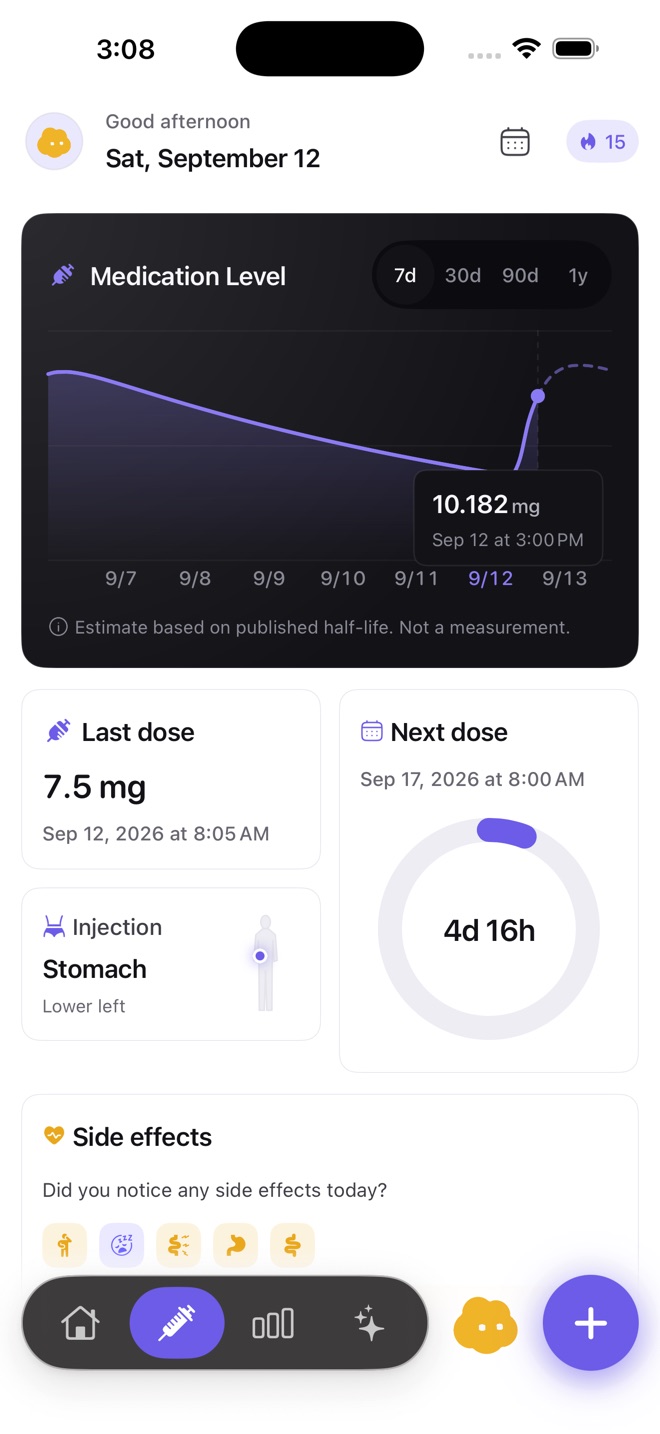
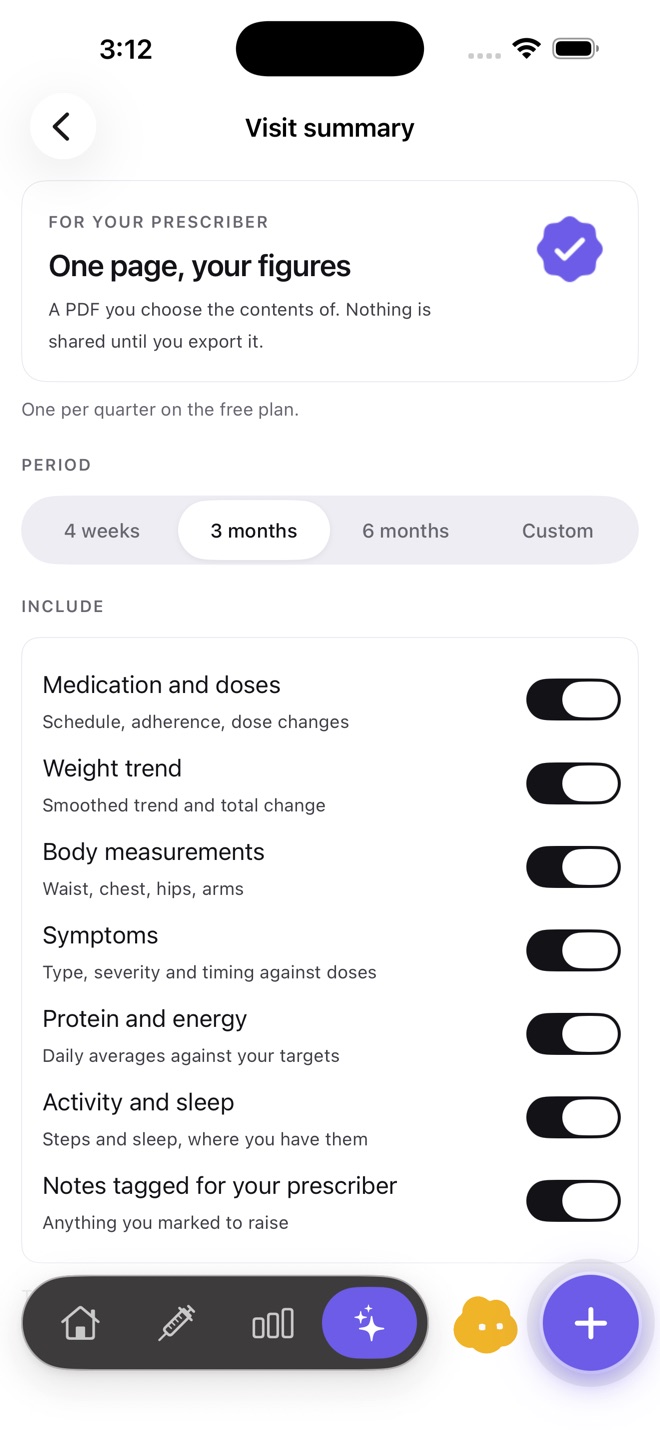
Side effects are easier to discuss when they have dates. Cafeity records what you felt, how strongly and when, on the same timeline as your doses, so a pattern — worse after dose increases, worse on the second day after an injection — is visible rather than remembered. The Visit Summary shows symptom type, severity and timing against doses on one page.
Common questions
What is the most common side effect of GLP-1 medicines?
Do GLP-1 side effects go away?
Which GLP-1 has the fewest side effects?
Are side effects worse on the tablets than the injections?
Do these medicines cause suicidal thoughts?
Sources
- Semaglutide injection and tablets for weight management — US prescribing information DailyMed, US National Library of Medicine, version published 30 June 2026
- Tirzepatide injection for weight management and obstructive sleep apnoea — US prescribing information DailyMed, US National Library of Medicine, version published 2 September 2026
- Semaglutide injection for type 2 diabetes — US prescribing information DailyMed, US National Library of Medicine, version published 10 June 2026
- Tirzepatide injection for type 2 diabetes — US prescribing information DailyMed, US National Library of Medicine, version published 2 September 2026
- Orforglipron tablets for weight management — US prescribing information DailyMed, US National Library of Medicine, version published 13 August 2026
- Liraglutide 3 mg injection for weight management — US prescribing information DailyMed, US National Library of Medicine, version published 15 June 2026
- FDA requests removal of suicidal behavior and ideation warning from GLP-1 receptor agonist medications US Food and Drug Administration, Drug Safety Communication, 13 January 2026
- MedWatch — report a side effect to the FDA US Food and Drug Administration
- Yellow Card — report a suspected side effect (UK) Medicines and Healthcare products Regulatory Agency
Written by the Cafeity team from the sources listed here. Figures from prescribing information are quoted as the label states them; trial results are averages from those trials, not predictions for any one person. This page has not yet been reviewed by a clinician — see the editorial policy for how pages are researched and corrected.