

How common it is
Every GLP-1 label lists diarrhoea among its common reactions. The placebo figures matter here: diarrhoea is common anyway, and on placebo it was reported by 8% to 16% of people in the weight-management trials.
| Medicine (trial population) | Placebo | Medicine |
|---|---|---|
| Semaglutide 2.4 mg weekly injection (adults with obesity or overweight) | 16% | 30% |
| Tirzepatide weekly injection (adults with obesity or overweight) | 8% | 19% (5 mg), 21% (10 mg), 23% (15 mg) |
| Liraglutide 3 mg daily injection (adults with overweight or obesity) | 9.9% | 20.9% |
| Orforglipron daily tablet (adults with obesity or overweight) | 11% | 21% (5.5 mg), 23% (9 mg), 25% (17.2 mg) |
| Semaglutide weekly injection (type 2 diabetes) (adults with type 2 diabetes) | 1.9% | 8.5% (0.5 mg), 8.8% (1 mg) |
| Tirzepatide weekly injection (type 2 diabetes) (adults with type 2 diabetes) | 9% | 12% (5 mg), 13% (10 mg), 17% (15 mg) |
| Dulaglutide weekly injection (adults with type 2 diabetes) | 6.7% | 8.9% (0.75 mg), 12.6% (1.5 mg) |
| Liraglutide daily injection (type 2 diabetes) (adults with type 2 diabetes) | 4% | 10% (1.2 mg), 12% (1.8 mg) |
| Semaglutide daily tablets (type 2 diabetes) (adults with type 2 diabetes) | 4% | 9% (7 mg), 10% (14 mg) |
| Exenatide twice-daily injection (adults with type 2 diabetes) | 6% | 13% |
It is one of the reactions most often given as a reason for stopping, though the numbers are small: 0.7% of people stopped semaglutide 2.4 mg because of diarrhoea, against 0.1% on placebo.1 The tirzepatide label says most nausea, vomiting and diarrhoea happened while the dose was being increased and decreased over time.2
Why fluids come first
The prescribing information for these medicines carries a warning about acute kidney injury: there have been reports, some needing dialysis, mostly in people whose nausea, vomiting or diarrhoea led to dehydration.1 The patient information for tirzepatide puts it plainly — diarrhoea, nausea and vomiting can cause a loss of fluids, and it is important to drink fluids to reduce the chance of dehydration.2
On a smaller appetite, people often drink less too, which makes this easier to get wrong than it sounds. Small, frequent drinks are easier than large ones on an unsettled stomach. The water and electrolytes guide covers this in more detail: hydration on a GLP-1.
What the guidance suggests
The 2025 joint nutrition advisory for people on GLP-1 medicines suggests, for diarrhoea:5
- Avoiding large or high-fat meals, which are harder going on a slower stomach.
- Fibre supplements to add bulk — worth discussing with a pharmacist.
- Anti-diarrhoeal medicines for short-term relief, which is a question for a pharmacist or prescriber, especially alongside other medicines.
Many people also find that alcohol, very sugary drinks, and large amounts of coffee make it worse, and that plain, smaller meals help while it lasts. Log what you ate before an episode: triggers are personal.
Diarrhoea and constipation together
Some people alternate between the two, particularly around dose changes. It is common, and a dated record is the easiest way to show a prescriber what is actually happening. See constipation.
When to contact your prescriber
Keeping a record of it
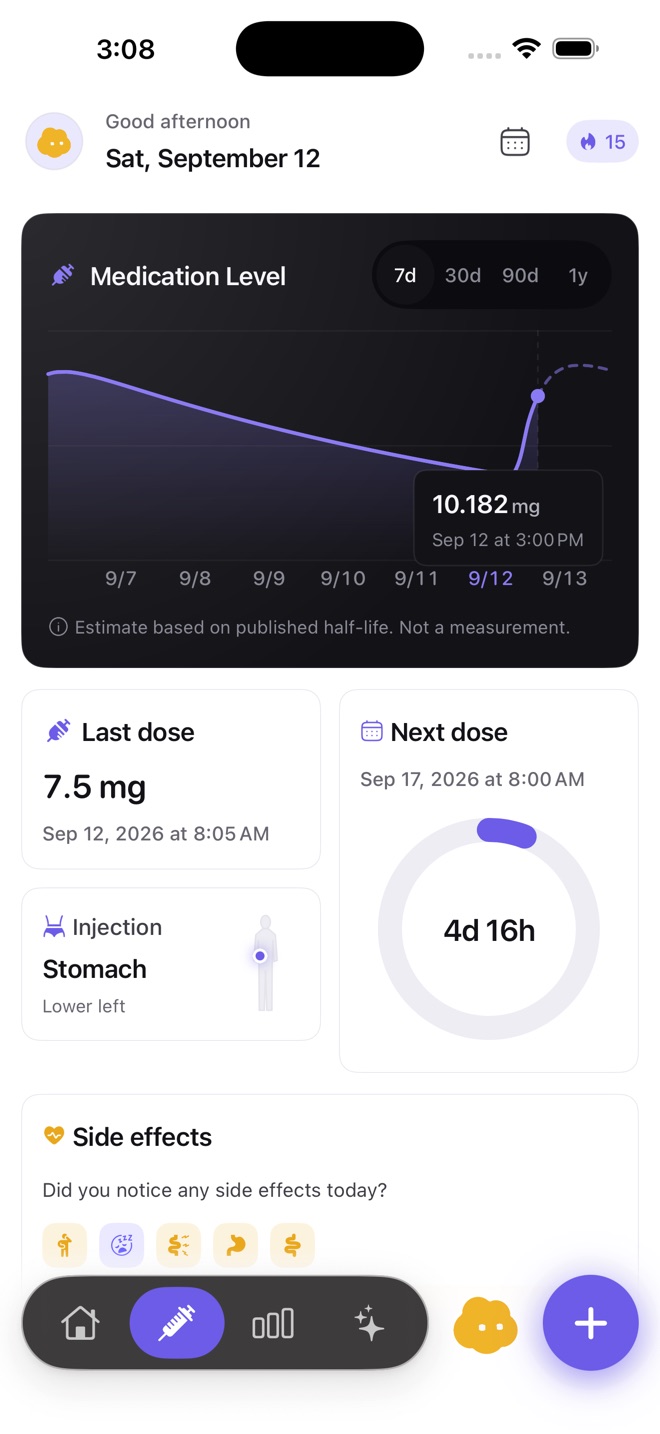
Log each episode with a severity and a time, on the same timeline as your doses, meals and fluids. After a few weeks the record shows whether it follows dose increases, particular foods or the days after an injection — and the Visit Summary puts that on one page for your prescriber.

Common questions
How long does GLP-1 diarrhoea last?
Is diarrhoea on a GLP-1 dangerous?
What should I eat with GLP-1 diarrhoea?
Sources
- Semaglutide injection and tablets for weight management — US prescribing information DailyMed, US National Library of Medicine, version published 30 June 2026
- Tirzepatide injection for weight management and obstructive sleep apnoea — US prescribing information DailyMed, US National Library of Medicine, version published 2 September 2026
- Liraglutide 3 mg injection for weight management — US prescribing information DailyMed, US National Library of Medicine, version published 15 June 2026
- Orforglipron tablets for weight management — US prescribing information DailyMed, US National Library of Medicine, version published 13 August 2026
- Nutritional priorities to support GLP-1 therapy for obesity: a joint advisory from the American College of Lifestyle Medicine, the American Society for Nutrition, the Obesity Medicine Association and The Obesity Society Mozaffarian D et al. 2025 (published in four journals)
Written by the Cafeity team from the sources listed here. Figures from prescribing information are quoted as the label states them; trial results are averages from those trials, not predictions for any one person. This page has not yet been reviewed by a clinician — see the editorial policy for how pages are researched and corrected.