

Why it matters more on a GLP-1
Three things line up. Thirst tends to fall with appetite. Food, which normally supplies a good share of daily water, falls too. And the commonest side effects — nausea, vomiting and diarrhoea — are exactly the ones that lose fluid. The labels' warning about kidney injury says most reported cases followed gastrointestinal reactions that led to dehydration, and asks clinicians to watch kidney function especially when starting and increasing the dose.1
How much
The European Food Safety Authority sets adequate total water intakes of 2.0 L a day for women and 2.5 L for men; the US Institute of Medicine's figures are 2.7 L and 3.7 L, of which roughly 80% typically comes from drinks.34 Cafeity's own reference figure is 33 ml per kg of body weight — see the water intake calculator for its working. Heat, exercise, illness, vomiting and diarrhoea all raise needs. If you have heart or kidney disease, follow your doctor's fluid advice.
Electrolytes
On an ordinary day, plain water and food cover most people's needs. When you are losing fluid through vomiting or diarrhoea, oral rehydration solutions from a pharmacy are designed to replace water and salts together; a pharmacist can advise. Many "GLP-1 electrolyte" products are simply flavoured salt and sugar mixes — check the label, and be cautious with high-sodium products if you have high blood pressure or heart or kidney problems.
Habits that help
- Small, frequent sips rather than large glasses, especially when queasy.
- A glass with each meal and each dose — the shot-day routine in Cafeity includes water through the day.
- Soups, yoghurt and fruit count towards fluid.
- Go easy on alcohol, which the joint advisory notes may worsen nausea and reflux.5
When to contact your prescriber
Keeping a record of it
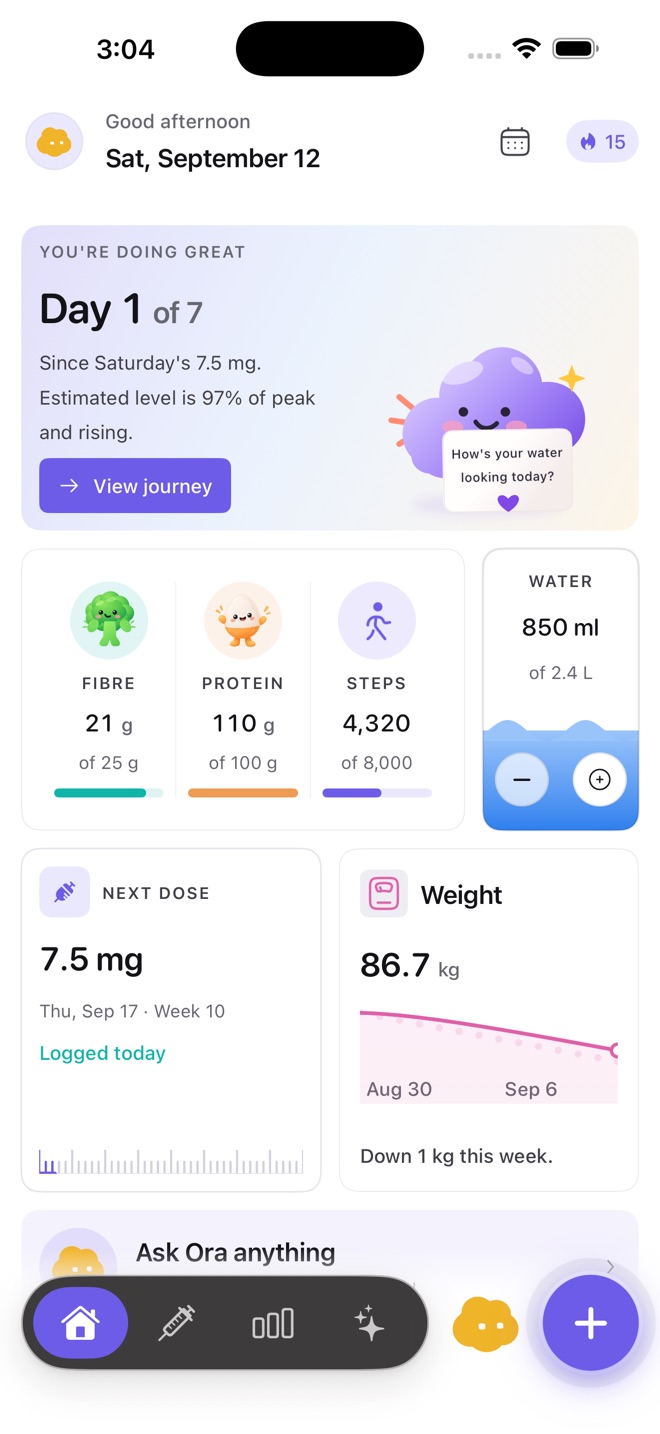
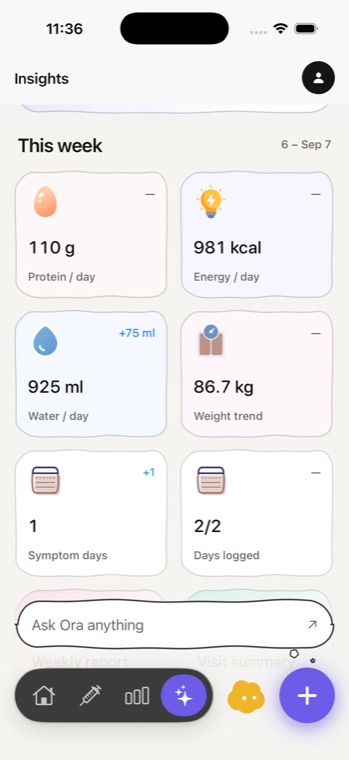
Cafeity logs water in a tap and shows it against your reference figure on the Today screen, with an optional water reminder. It can also write the water you log to Apple Health.
Common questions
How much water should I drink on a GLP-1?
Do I need electrolyte drinks on a GLP-1?
Why is dehydration dangerous on a GLP-1?
Sources
- Semaglutide injection and tablets for weight management — US prescribing information DailyMed, US National Library of Medicine, version published 30 June 2026
- Tirzepatide injection for weight management and obstructive sleep apnoea — US prescribing information DailyMed, US National Library of Medicine, version published 2 September 2026
- Scientific Opinion on Dietary Reference Values for water EFSA Journal 2010;8(3):1459
- Dietary Reference Intakes for Water, Potassium, Sodium, Chloride, and Sulfate Institute of Medicine, National Academies Press (2005)
- Nutritional priorities to support GLP-1 therapy for obesity: a joint advisory from the American College of Lifestyle Medicine, the American Society for Nutrition, the Obesity Medicine Association and The Obesity Society Mozaffarian D et al. 2025 (published in four journals)
Written by the Cafeity team from the sources listed here. Figures from prescribing information are quoted as the label states them; trial results are averages from those trials, not predictions for any one person. This page has not yet been reviewed by a clinician — see the editorial policy for how pages are researched and corrected.