

The priorities, in order
The joint advisory sets out what clinicians should emphasise for people taking GLP-1 medicines for obesity. In plain terms:2
| Priority | What it means on the plate |
|---|---|
| Nutrient-dense, minimally processed food | Vegetables, fruit, wholegrains, pulses, lean protein, nuts and seeds — every mouthful counts more when there are fewer of them. |
| Enough protein | 1.2 to 1.6 g per kg of body weight a day proposed during active weight loss; 80 to 120 g a day as a practical figure; never below about 0.4–0.5 g per kg. |
| Fibre and fluids | From food first, for gut health and to prevent constipation. |
| Micronutrients | Very low intakes raise the risk of shortfalls; vitamin D, calcium and B12 deserve particular attention. |
| Limit alcohol | It may worsen nausea and reflux on these medicines. |
| Strength training alongside | Protein alone does not protect muscle; resistance exercise is part of the plan. |
Protein first
When appetite falls, protein is the nutrient most likely to fall short, and it is the one most tied to keeping muscle. The practical habit is simple: start each meal with the protein, before fullness arrives. Eggs, Greek yoghurt, cottage cheese, fish, chicken, tofu, tempeh, lentils and beans all work in small portions. The printable protein food list shows grams per portion for 28 everyday foods, and the protein calculator shows Cafeity's own reference figure of 1.4 g per kg with its working.
Cafeity's figure and the advisory's range are references for a conversation with your prescriber or a dietitian — particularly if you have kidney disease, where protein targets need individual advice.
Fibre and fluids
US reference intakes for fibre are about 25 g a day for women and 38 g for men up to 50; UK guidance is 30 g.34 On a smaller appetite, pulses, oats, wholegrains, berries and seeds carry the most fibre per bite. Increase it gradually and with water, or it can bloat a slower gut. Fluids matter for their own sake too: the labels warn that dehydration from vomiting or diarrhoea has caused kidney problems.1 See hydration and electrolytes.
Eating around side effects
- Nausea: smaller, more frequent meals; go easy on fatty food and, while it lasts, on very high-fibre food; do not skip meals.2 See nausea.
- Constipation: fluids and fibre from food first.2 See constipation.
- Diarrhoea: avoid large or high-fat meals.2 See diarrhoea.
- Reflux and burping: smaller, earlier evening meals and less fat. See heartburn.
What to limit, not ban
No food is forbidden by the labels. What tends to cause trouble on a slower stomach is large portions, very fatty or fried meals, and alcohol; what tends to crowd out nutrition on a small appetite is heavily processed, low-protein snacking. That is a reason to plan, not a list of sins — Cafeity deliberately never marks a food red.
The real risk is eating too little
The advisory flags that intakes below about 1,200 kcal a day for women and 1,800 for men make micronutrient shortfalls more likely, and recommends regular reassessment of what people on these medicines are eating.2 The labels also note that substantial or rapid weight loss can increase the risk of gallstones.1 If you are eating very little, tell your prescriber. Cafeity never sets an energy target below 1,200 kcal.
Keeping a record of it
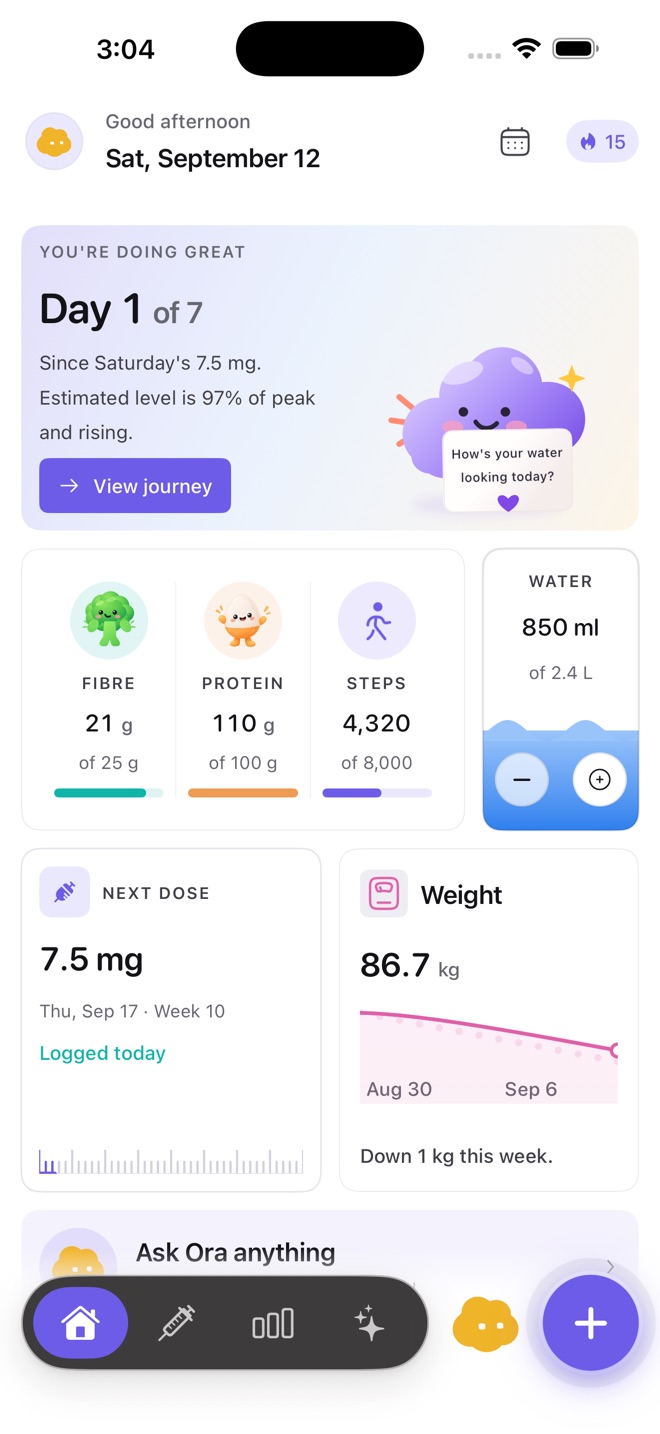
Cafeity's food log leads with protein, fibre and water, and puts each meal on the same timeline as your doses — so a run of low-protein days after each injection is visible, not guessed.

Common questions
Is there a GLP-1 diet?
How much protein should I eat on a GLP-1?
What foods should I avoid on a GLP-1?
Sources
- Semaglutide injection and tablets for weight management — US prescribing information DailyMed, US National Library of Medicine, version published 30 June 2026
- Nutritional priorities to support GLP-1 therapy for obesity: a joint advisory from the American College of Lifestyle Medicine, the American Society for Nutrition, the Obesity Medicine Association and The Obesity Society Mozaffarian D et al. 2025 (published in four journals)
- Dietary Reference Intakes for Energy, Carbohydrate, Fiber, Fat, Fatty Acids, Cholesterol, Protein, and Amino Acids Institute of Medicine, National Academies Press (2005)
- Carbohydrates and Health Scientific Advisory Committee on Nutrition, UK (2015)
Written by the Cafeity team from the sources listed here. Figures from prescribing information are quoted as the label states them; trial results are averages from those trials, not predictions for any one person. This page has not yet been reviewed by a clinician — see the editorial policy for how pages are researched and corrected.