
Four ways to log
| Method | Best for | Notes |
|---|---|---|
| Photo | Home-cooked and restaurant plates | AI estimates the foods and amounts; you can correct them. Free allowance; unlimited with Pro. |
| Search | Anything in the database | Built on USDA FoodData Central and Open Food Facts. |
| Barcode | Packaged food | Scan and confirm the portion. |
| Quick-add | Days when detail is too much | Just the protein, or just the calories. |
Protein, fibre and water first
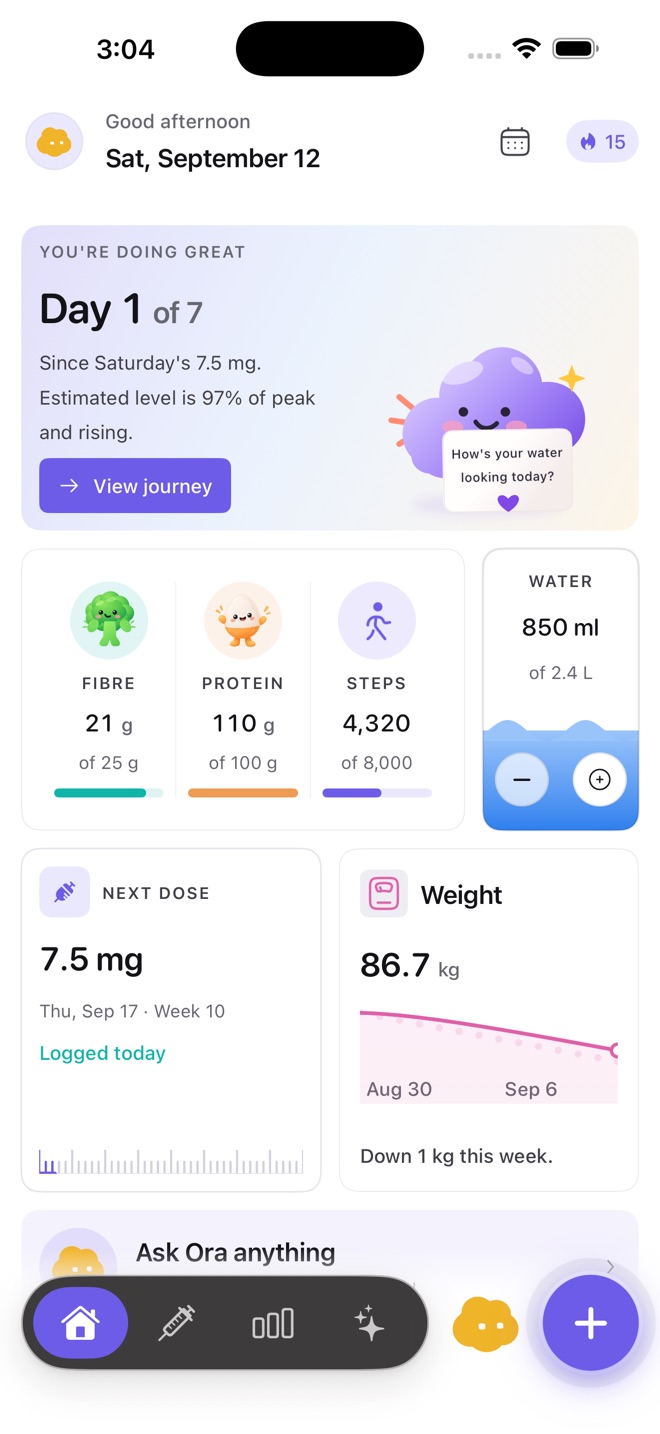
On a smaller appetite the risk is eating too little of what matters, so the food log leads with protein, fibre and water rather than with a calorie budget. The reference figures — protein at 1.4 g per kg, water at 33 ml per kg, fibre at 25 g (30 g for men) — are derived in the open on the calculators. The 2025 joint advisory for people on GLP-1 medicines makes nutrient-dense food and adequate protein its first priorities.2
No judgement built in
There are no red foods, no "bad day" banners and no leaderboards. Calories are shown as context. Energy targets are floored at 1,200 kcal, and goal weights at a BMI of 18.5, because an app that pushes intake lower on a medicine that already suppresses appetite is doing harm.
Why the dose and the meal belong together
A food log in a separate app cannot see that your low-protein days cluster after injections, or that a heavy meal preceded the worst nausea of the week. In Cafeity they are on one timeline, which is what makes the daily note and the Visit Summary possible.
Keeping a record of it
Screens from Cafeity on iPhone.

Common questions
How accurate is photo food logging?
Where does the food data come from?
Does Cafeity send my food to Apple Health?
Sources
- FoodData Central US Department of Agriculture, Agricultural Research Service
- Nutritional priorities to support GLP-1 therapy for obesity: a joint advisory from the American College of Lifestyle Medicine, the American Society for Nutrition, the Obesity Medicine Association and The Obesity Society Mozaffarian D et al. 2025 (published in four journals)
Written by the Cafeity team from the sources listed here. Figures from prescribing information are quoted as the label states them; trial results are averages from those trials, not predictions for any one person. This page has not yet been reviewed by a clinician — see the editorial policy for how pages are researched and corrected.