

How common it is
| Medicine (trial population) | Placebo | Medicine |
|---|---|---|
| Semaglutide 2.4 mg weekly injection (adults with obesity or overweight) | 4% | 8% |
| Semaglutide 7.2 mg weekly injection (adults with obesity) | 1% | 5% (2.4 mg), 6% (7.2 mg) |
| Tirzepatide weekly injection (adults with obesity or overweight) | 2% | 4% (5 mg), 5% (10 mg), 4% (15 mg) |
| Liraglutide 3 mg daily injection (adults with overweight or obesity) | 5% | 6.9% |
| Exenatide twice-daily injection (adults with type 2 diabetes) | 6% | 9% |
| Orforglipron daily tablet (adults with obesity or overweight) | 3% | 4% (all doses pooled) |
Blood pressure
As weight falls, blood pressure often falls with it. The labels record hypotension more often on treatment: 1.3% against 0.4% for semaglutide 2.4 mg (with fainting in 0.8% against 0.2%), 1.6% against 0.1% for tirzepatide, and 2% against 0.5% for orforglipron.124 In each case it was seen more often in people also taking medicines for blood pressure, and some episodes came with gastrointestinal side effects and fluid loss.
If you take blood-pressure medicines, it is worth asking your prescriber how they will be reviewed as your weight changes — a home blood-pressure reading in your record makes that conversation easy.
Other causes
- Dehydration from vomiting, diarrhoea or simply drinking less.2
- Low blood sugar in people taking insulin or a sulfonylurea; dizziness and light-headedness are among its listed signs.2
- Eating very little.
Heart rate also rises slightly on these medicines, and the labels ask patients to report palpitations or a racing heartbeat at rest.1
When to contact your prescriber
Keeping a record of it
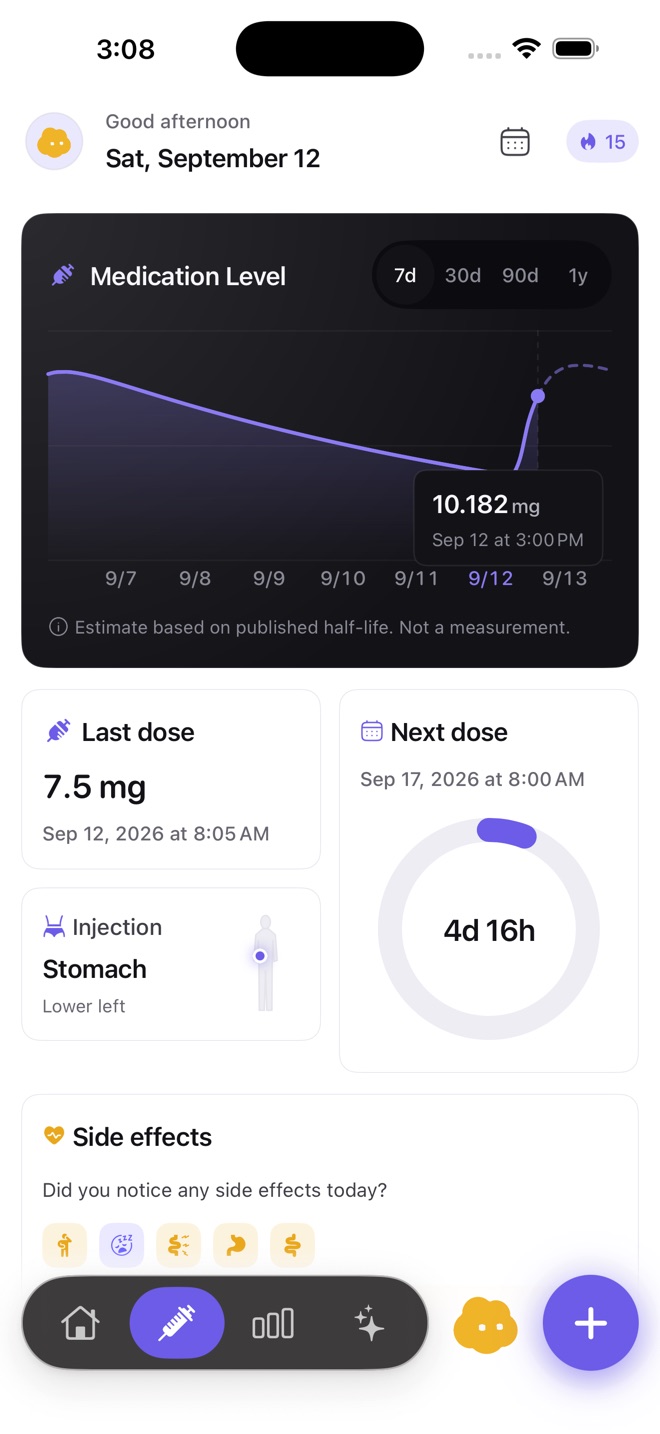
Log dizziness with a severity and a time, on the same timeline as your doses, meals and fluids. After a few weeks the record shows whether it follows dose increases, particular foods or the days after an injection — and the Visit Summary puts that on one page for your prescriber.

Common questions
Can GLP-1 medicines cause dizziness?
Should I stop my blood-pressure medicine?
Sources
- Semaglutide injection and tablets for weight management — US prescribing information DailyMed, US National Library of Medicine, version published 30 June 2026
- Tirzepatide injection for weight management and obstructive sleep apnoea — US prescribing information DailyMed, US National Library of Medicine, version published 2 September 2026
- Liraglutide 3 mg injection for weight management — US prescribing information DailyMed, US National Library of Medicine, version published 15 June 2026
- Orforglipron tablets for weight management — US prescribing information DailyMed, US National Library of Medicine, version published 13 August 2026
Written by the Cafeity team from the sources listed here. Figures from prescribing information are quoted as the label states them; trial results are averages from those trials, not predictions for any one person. This page has not yet been reviewed by a clinician — see the editorial policy for how pages are researched and corrected.