

How common it is
| Medicine (trial population) | Placebo | Medicine |
|---|---|---|
| Semaglutide 2.4 mg weekly injection (adults with obesity or overweight) | 5% | 11% |
| Semaglutide 7.2 mg weekly injection (adults with obesity) | 5% | 9% (2.4 mg), 11% (7.2 mg) |
| Tirzepatide weekly injection (adults with obesity or overweight) | 3% | 5% (5 mg), 6% (10 mg), 7% (15 mg) |
| Liraglutide 3 mg daily injection (adults with overweight or obesity) | 4.6% | 7.5% |
| Orforglipron daily tablet (adults with obesity or overweight) | 4% | 6% (5.5 mg), 7% (9 mg), 9% (17.2 mg) |
| Dulaglutide weekly injection (adults with type 2 diabetes) | 2.6% | 4.2% (0.75 mg), 5.6% (1.5 mg) |
The labels group several related terms together — fatigue, asthenia (weakness), lethargy and malaise — so the numbers describe a general feeling of tiredness rather than one precise symptom.2
Why it happens
No label pins tiredness on a single mechanism, but the context points to a few contributors:
- Eating much less. The labels say these medicines reduce calorie intake by affecting appetite.1 A sudden drop in food, particularly in protein and carbohydrate, is tiring.
- Gastrointestinal side effects. The liraglutide label notes tiredness was often reported alongside nausea, vomiting and diarrhoea.3 A day of nausea is a tiring day.
- Fluid. A smaller appetite often means drinking less, and mild dehydration feels like fatigue.
- Low blood sugar, for people taking insulin or a sulfonylurea — tiredness, weakness and dizziness are among its signs in the patient information.2
When it tends to ease
The liraglutide label reports that tiredness, weakness and dizziness were mostly seen in the first 12 weeks.3 That fits the broader pattern in which side effects cluster during dose escalation and ease afterwards. Tiredness that starts or worsens months in, or that is getting worse rather than better, is worth raising — it has plenty of causes that have nothing to do with the medicine.
What tends to help
The 2025 joint advisory's general priorities for people on these medicines are also the practical answer to most tiredness: adequate protein, nutrient-dense food, regular meals rather than long gaps, fluids, and strength training.5 The advisory also flags that very low intakes raise the risk of micronutrient shortfalls, and suggests clinicians consider vitamin D, calcium and B12 — a reasonable thing to ask about if tiredness persists.5
Sleep matters too: see sleep on a GLP-1.
When to contact your prescriber
Keeping a record of it
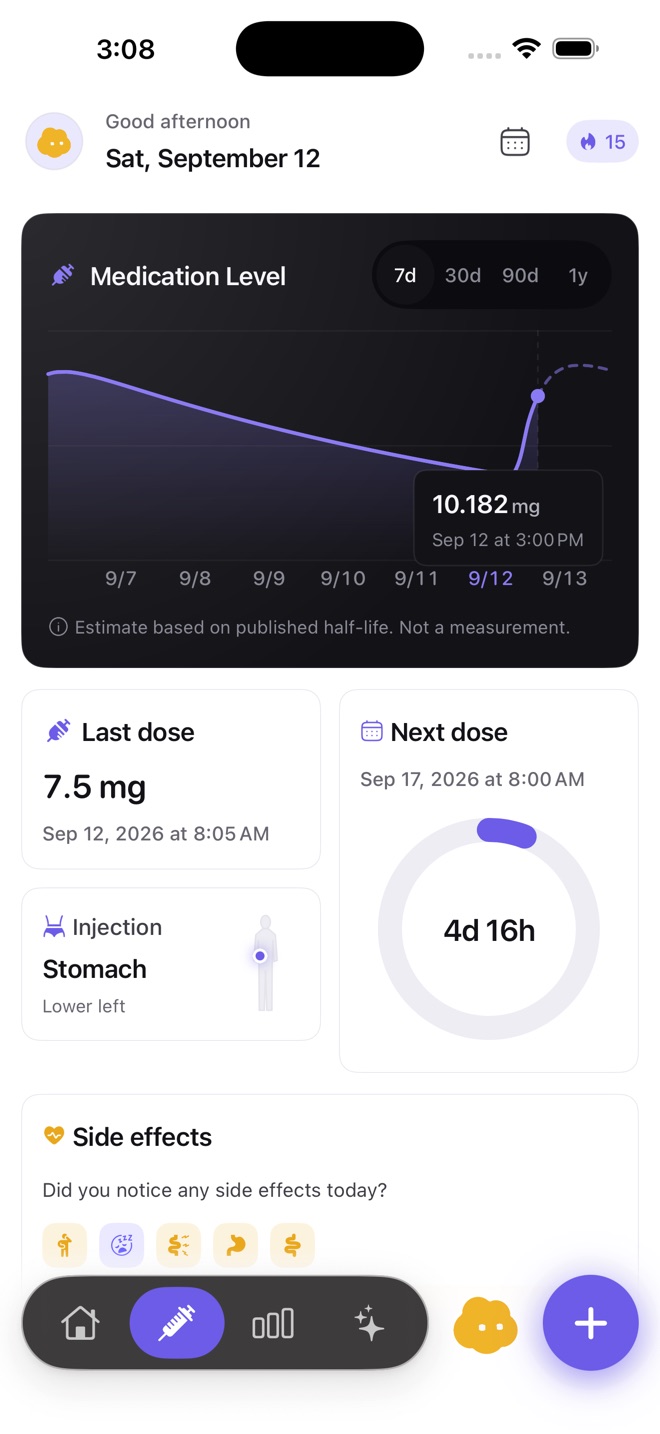
Log energy with a severity and a time, on the same timeline as your doses, meals and fluids. After a few weeks the record shows whether it follows dose increases, particular foods or the days after an injection — and the Visit Summary puts that on one page for your prescriber.

Common questions
Why am I so tired on a GLP-1?
Does GLP-1 tiredness go away?
Is it tiredness the day after the injection?
Sources
- Semaglutide injection and tablets for weight management — US prescribing information DailyMed, US National Library of Medicine, version published 30 June 2026
- Tirzepatide injection for weight management and obstructive sleep apnoea — US prescribing information DailyMed, US National Library of Medicine, version published 2 September 2026
- Liraglutide 3 mg injection for weight management — US prescribing information DailyMed, US National Library of Medicine, version published 15 June 2026
- Orforglipron tablets for weight management — US prescribing information DailyMed, US National Library of Medicine, version published 13 August 2026
- Nutritional priorities to support GLP-1 therapy for obesity: a joint advisory from the American College of Lifestyle Medicine, the American Society for Nutrition, the Obesity Medicine Association and The Obesity Society Mozaffarian D et al. 2025 (published in four journals)
Written by the Cafeity team from the sources listed here. Figures from prescribing information are quoted as the label states them; trial results are averages from those trials, not predictions for any one person. This page has not yet been reviewed by a clinician — see the editorial policy for how pages are researched and corrected.