
What the labels report
Insomnia appears in the liraglutide 3 mg label at 2.4% against 1.7% on placebo.1 It is not among the common reactions in the current semaglutide, tirzepatide or orforglipron weight-management labels. The more common sleep-disturbers are the gastrointestinal reactions: reflux and indigestion are worse lying down, and nausea does not keep office hours.
Obstructive sleep apnoea
Tirzepatide is approved in the US to treat moderate to severe obstructive sleep apnoea in adults with obesity. It was tested in two trials, one in people not using a breathing (PAP) machine and one in people who were; the adverse reactions were similar to those in its weight-management trials.2 Whether it suits you, and whether it changes anything about PAP, is a conversation with your sleep specialist or prescriber.
What tends to help
- An earlier, smaller evening meal and a few hours before lying down, for reflux and nausea.
- Going easy on alcohol, which the 2025 joint advisory notes may worsen nausea and reflux.3
- Enough food earlier in the day, so hunger does not wake you.
- Logging sleep alongside your doses and symptoms for a few weeks, to see what actually moves it.
When to contact your prescriber
Keeping a record of it
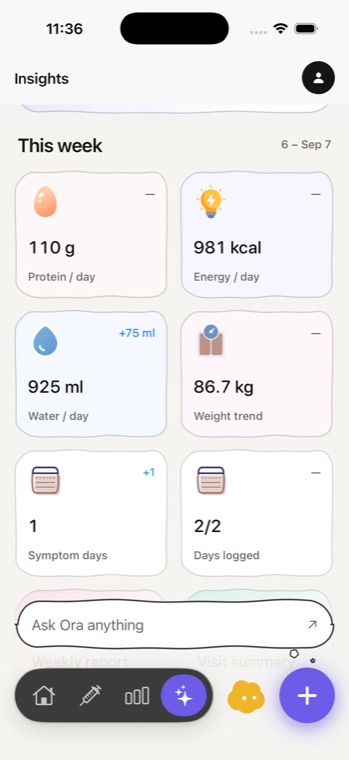
Cafeity can read sleep from Apple Health, so nights sit on the same timeline as doses, meals and symptoms without extra logging.

Common questions
Can GLP-1 medicines cause insomnia?
Is a GLP-1 approved for sleep apnoea?
Sources
- Liraglutide 3 mg injection for weight management — US prescribing information DailyMed, US National Library of Medicine, version published 15 June 2026
- Tirzepatide injection for weight management and obstructive sleep apnoea — US prescribing information DailyMed, US National Library of Medicine, version published 2 September 2026
- Nutritional priorities to support GLP-1 therapy for obesity: a joint advisory from the American College of Lifestyle Medicine, the American Society for Nutrition, the Obesity Medicine Association and The Obesity Society Mozaffarian D et al. 2025 (published in four journals)
Written by the Cafeity team from the sources listed here. Figures from prescribing information are quoted as the label states them; trial results are averages from those trials, not predictions for any one person. This page has not yet been reviewed by a clinician — see the editorial policy for how pages are researched and corrected.