

How common it is
| Medicine (trial population) | Placebo | Medicine |
|---|---|---|
| Semaglutide 2.4 mg weekly injection (adults with obesity or overweight) | 10% | 14% |
| Semaglutide 7.2 mg weekly injection (adults with obesity) | 7% | 8% (2.4 mg), 9% (7.2 mg) |
| Liraglutide 3 mg daily injection (adults with overweight or obesity) | 12.6% | 13.6% |
| Orforglipron daily tablet (adults with obesity or overweight) | 7% | 8% (5.5 mg), 9% (9 mg), 9% (17.2 mg) |
| Liraglutide daily injection (type 2 diabetes) (adults with type 2 diabetes) | 7% | 11% (1.2 mg), 10% (1.8 mg) |
| Exenatide twice-daily injection (adults with type 2 diabetes) | 6% | 9% |
Placebo groups report plenty of headaches too — 7% to 13% in these trials — so the extra attributable to the medicine is a few percentage points.
Likely contributors
- Fluid. A smaller appetite and a lower thirst often mean drinking less; vomiting and diarrhoea make it worse.4
- Eating much less, or going long stretches without food.
- Low blood sugar in people taking insulin or a sulfonylurea — headache is among its listed signs.4
- Changes in routine that often come with a new medicine — less caffeine, poorer sleep.
What tends to help
Regular meals and steady fluids through the day, rather than long gaps, are the general advice for people on these medicines, and they address the commonest contributors.5 For pain relief, ask a pharmacist which over-the-counter option suits you alongside your other medicines. Logging headaches with the time and what you had eaten and drunk often makes the trigger obvious within a couple of weeks.
When to contact your prescriber
Keeping a record of it
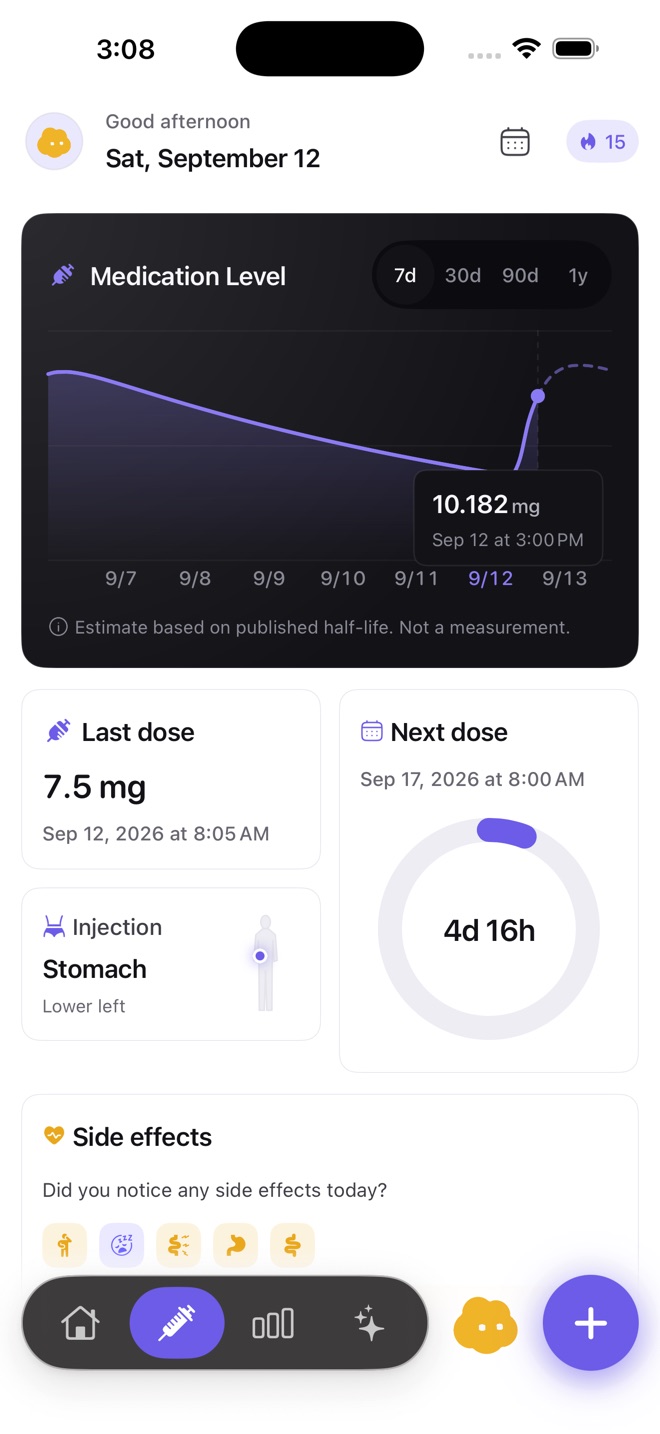
Log headaches with a severity and a time, on the same timeline as your doses, meals and fluids. After a few weeks the record shows whether it follows dose increases, particular foods or the days after an injection — and the Visit Summary puts that on one page for your prescriber.

Common questions
Do GLP-1 medicines cause headaches?
Why do I get a headache the day after my injection?
Sources
- Semaglutide injection and tablets for weight management — US prescribing information DailyMed, US National Library of Medicine, version published 30 June 2026
- Liraglutide 3 mg injection for weight management — US prescribing information DailyMed, US National Library of Medicine, version published 15 June 2026
- Orforglipron tablets for weight management — US prescribing information DailyMed, US National Library of Medicine, version published 13 August 2026
- Tirzepatide injection for weight management and obstructive sleep apnoea — US prescribing information DailyMed, US National Library of Medicine, version published 2 September 2026
- Nutritional priorities to support GLP-1 therapy for obesity: a joint advisory from the American College of Lifestyle Medicine, the American Society for Nutrition, the Obesity Medicine Association and The Obesity Society Mozaffarian D et al. 2025 (published in four journals)
Written by the Cafeity team from the sources listed here. Figures from prescribing information are quoted as the label states them; trial results are averages from those trials, not predictions for any one person. This page has not yet been reviewed by a clinician — see the editorial policy for how pages are researched and corrected.