

How common they are
| Medicine (trial population) | Placebo | Medicine |
|---|---|---|
| Tirzepatide weekly injection (adults with obesity or overweight) | 2% | 6% (5 mg), 8% (10 mg), 8% (15 mg) |
| Liraglutide 3 mg daily injection (adults with overweight or obesity) | 10.5% | 13.9% |
| Semaglutide 2.4 mg weekly injection (adults with obesity or overweight) | 1% | 1.4% (label text) |
The tirzepatide label adds a detail: reactions were more frequent in people who developed antibodies to the medicine (11.3%) than in those who did not (1%).1 The liraglutide label lists redness, itching and rash at the site as the most common.2
Rotation, and skin to avoid
- Rotate injection sites with each dose. You may use the same body area, but choose a different spot within it.
- Do not inject into skin that is tender, bruised, red or hard.
- Do not inject where the skin has pits, is thickened, or has lumps.
- Keep at least 2 inches (5 cm) from the belly button.
The tirzepatide instructions give the reason for rotating: it reduces the risk of lipodystrophy (pitted or thickened skin) and localised cutaneous amyloidosis (lumps) at injection sites.1 The printable rotation chart turns this into a routine.
Bruises and small lumps
A small bruise usually means the needle nicked a tiny blood vessel; the tirzepatide instructions say to press a cotton ball or gauze on the site and not to rub it.1 A small firm lump that fades over days is common. A lump that grows, stays for weeks, or keeps appearing at the same spot is worth showing to your prescriber — and is a reason to leave that area alone meanwhile.
When to contact your prescriber
Keeping a record of it
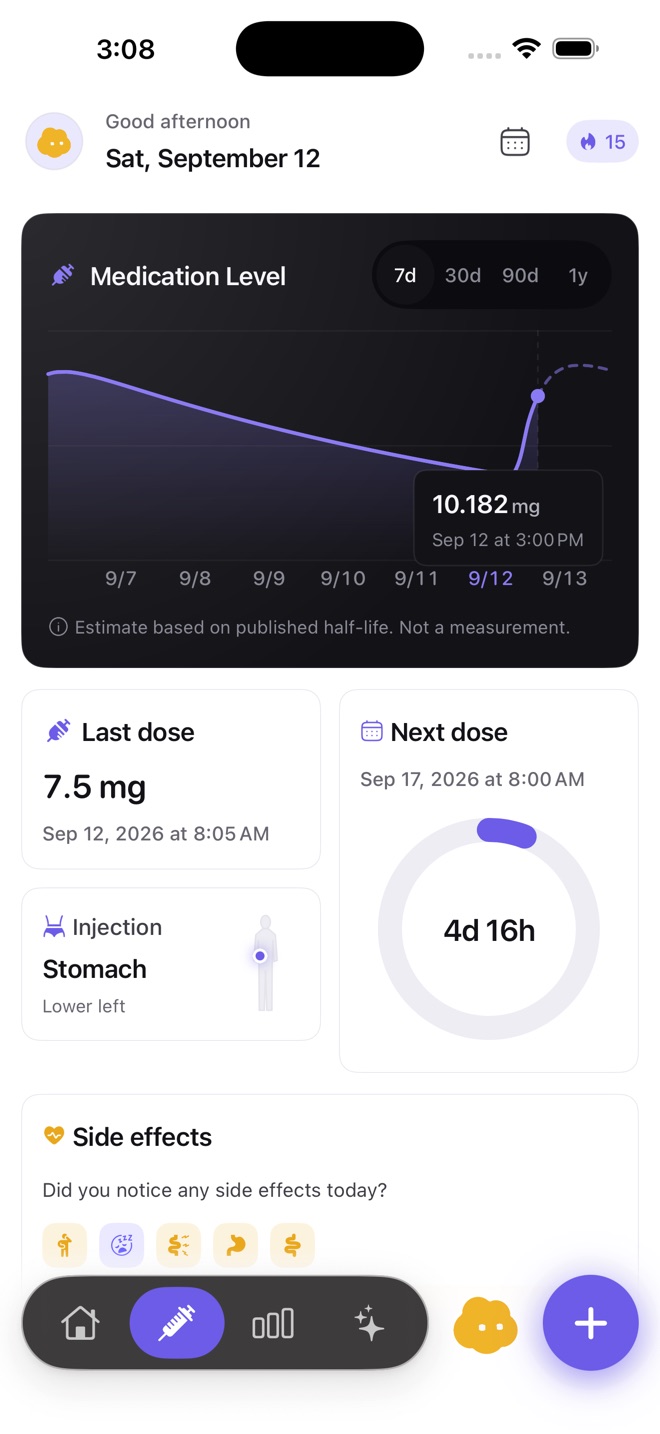
Cafeity records the site of every injection on a body map, so rotation is visible rather than remembered — and a note about a red patch or a lump stays attached to the injection that caused it.

Common questions
Is a red itchy spot after a GLP-1 injection normal?
Why do I get lumps where I inject?
Does injecting into a bruise matter?
Sources
- Tirzepatide injection for weight management and obstructive sleep apnoea — US prescribing information DailyMed, US National Library of Medicine, version published 2 September 2026
- Liraglutide 3 mg injection for weight management — US prescribing information DailyMed, US National Library of Medicine, version published 15 June 2026
- Semaglutide injection and tablets for weight management — US prescribing information DailyMed, US National Library of Medicine, version published 30 June 2026
Written by the Cafeity team from the sources listed here. Figures from prescribing information are quoted as the label states them; trial results are averages from those trials, not predictions for any one person. This page has not yet been reviewed by a clinician — see the editorial policy for how pages are researched and corrected.