

What the label means by dysaesthesia
The semaglutide label groups several descriptions under one heading: paraesthesia (pins and needles), hyperaesthesia (heightened sensitivity), a burning sensation, allodynia (pain from a touch that should not hurt), skin pain and sensitive skin.1
How common it is
| Medicine (trial population) | Placebo | Medicine |
|---|---|---|
| Semaglutide 2.4 mg weekly injection (adults with obesity or overweight) | 1% | 2% |
| Semaglutide 7.2 mg weekly injection (adults with obesity) | 0% | 6% (2.4 mg), 22% (7.2 mg) |
The label says the incidence increased with increasing dosage and drug levels in the blood. It was 0.2–0.4% on tirzepatide and 0.3–1% on orforglipron, close to placebo.123
What happened to people who had it
Of 288 people with dysaesthesia on semaglutide 7.2 mg, 2% stopped treatment, 8% paused it and 23% had their dose reduced; most of those recovered, and recovery was faster when some action was taken. Eighteen per cent had not recovered by the end of the trial, mostly those whose dose was unchanged. Of 38 people who went back up to 7.2 mg after recovering, 45% had it again.1
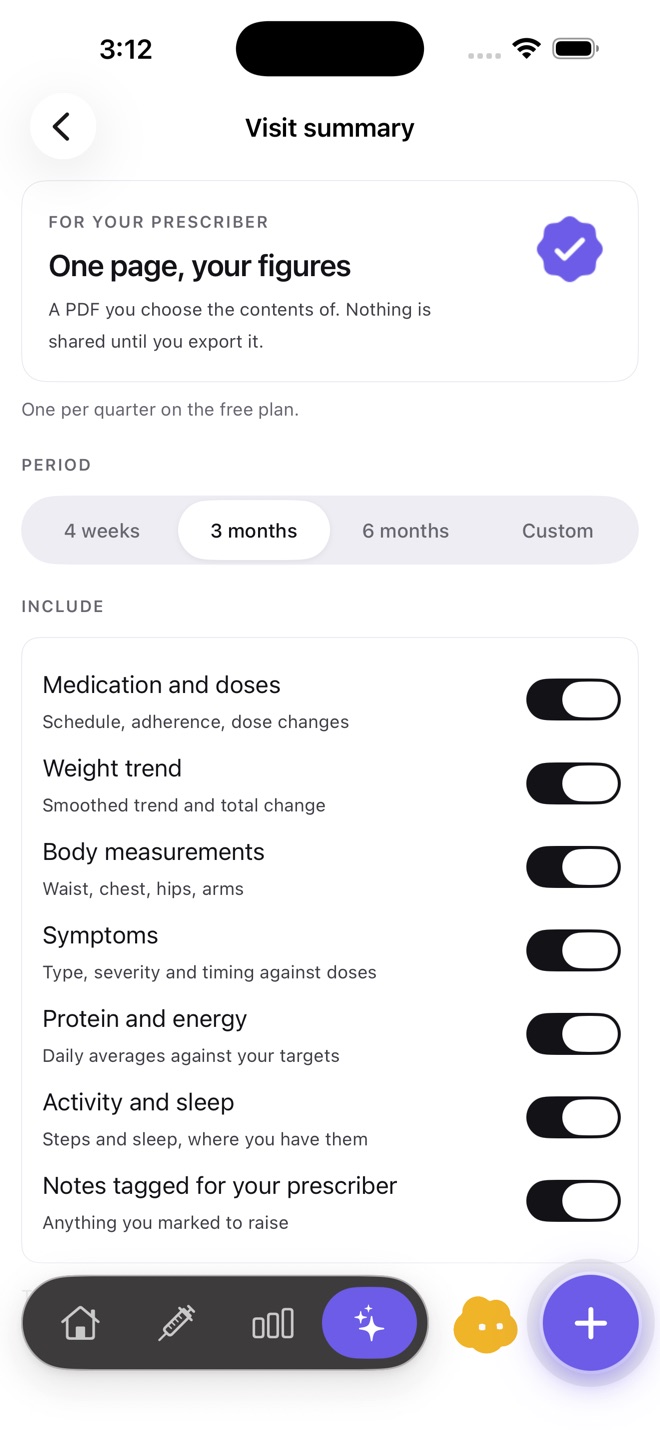
What to do about it is a decision for your prescriber. The useful thing you can bring is a record of when it started, where on the body, how strong, and whether it followed a dose change.
When to contact your prescriber
Keeping a record of it
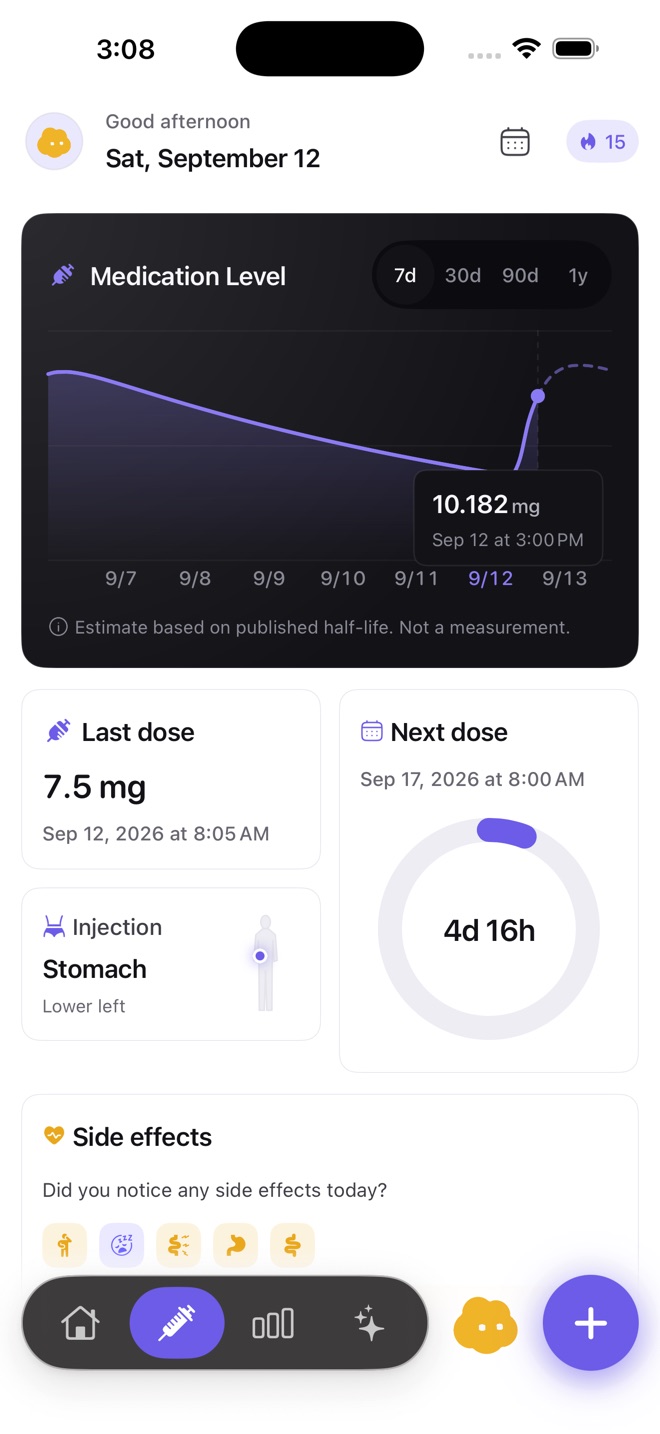
Record skin sensations in Cafeity's symptom log in your own words, with a severity — alongside the dose record, so a link to a dose change is visible.
Common questions
Can GLP-1 medicines cause burning or tingling skin?
Does GLP-1 skin sensitivity go away?
Sources
- Semaglutide injection and tablets for weight management — US prescribing information DailyMed, US National Library of Medicine, version published 30 June 2026
- Tirzepatide injection for weight management and obstructive sleep apnoea — US prescribing information DailyMed, US National Library of Medicine, version published 2 September 2026
- Orforglipron tablets for weight management — US prescribing information DailyMed, US National Library of Medicine, version published 13 August 2026
Written by the Cafeity team from the sources listed here. Figures from prescribing information are quoted as the label states them; trial results are averages from those trials, not predictions for any one person. This page has not yet been reviewed by a clinician — see the editorial policy for how pages are researched and corrected.