
High-volume, low-calorie meals for small appetites
A high-volume, low-calorie meal pairs watery foods with one protein food. In USDA FoodData Central, 0.5 cup of cucumber slices is 8 kcal, 1 cup of shredded romaine is 8 kcal, and 1 cup of ready-to-serve chicken broth is 15 kcal and 924 mg of sodium. The plates below are examples, not a plan. Ask your doctor or a registered dietitian what fits you.
Disclosure: Cafeity is made by the author.
This page puts foods together into plates. For the foods one by one, with USDA figures for each, see high-volume, low-calorie foods.
What "high volume, low calorie" means for a meal
Researchers call this energy density: the amount of energy in a particular weight of food, generally given as calories per gram (kcal/g). Water lowers energy density because it adds weight but no energy. A plate built mostly from watery foods holds few calories for its size.
Separately, the 2020–2025 Dietary Guidelines for Americans say nutritional needs should be met primarily from foods and beverages, specifically nutrient-dense foods and beverages. The plates below are put together from foods, with one protein food on most of them.
Four plates
Each part below is one USDA FoodData Central record, at the serving that record stores. A plate's total adds the rounded figures for its parts. Where a record returns no fiber value, the table says so and the plate total leaves it out.
| Part (FDC ID) | Serving | kcal | Protein | Fiber |
|---|---|---|---|---|
| Romaine lettuce, raw (169247) | 1 cup shredded, 47 g | 8 | 0.6 g | 1.0 g |
| Cucumber, with peel, raw (168409) | 0.5 cup slices, 52 g | 8 | 0.3 g | 0.3 g |
| Tomato, raw (170457) | 1 medium, 123 g | 22 | 1.1 g | 1.5 g |
| Egg white, raw (172183) | 1 large, 33 g | 17 | 3.6 g | 0.0 g |
| Plate | 55 | 5.6 g | 2.8 g |
| Part (FDC ID) | Serving | kcal | Protein | Fiber |
|---|---|---|---|---|
| Spinach, raw (168462) | 1 cup, 30 g | 7 | 0.9 g | 0.7 g |
| White mushrooms, raw (169251) | 1 cup pieces or slices, 70 g | 15 | 2.2 g | 0.7 g |
| Zucchini, with skin, raw (169291) | 1 cup sliced, 113 g | 19 | 1.4 g | 1.1 g |
| Greek yogurt, plain, nonfat (330137) | 100 g | 61 | 10.3 g | not on the record |
| Plate | 102 | 14.8 g | 2.5 g |
| Part (FDC ID) | Serving | kcal | Protein | Fiber | Sodium |
|---|---|---|---|---|---|
| Chicken broth, ready-to-serve (174536) | 1 cup, 249 g | 15 | 1.6 g | 0.0 g | 924 mg |
| Zucchini, with skin, raw (169291) | 1 cup sliced, 113 g | 19 | 1.4 g | 1.1 g | 9 mg |
| Plate | 34 | 3.0 g | 1.1 g | 933 mg |
| Part (FDC ID) | Serving | kcal | Protein | Fiber |
|---|---|---|---|---|
| Strawberries, raw (167762) | 1 cup halves, 152 g | 49 | 1.0 g | 3.0 g |
| Greek yogurt, plain, nonfat (330137) | 156 g (portion on the record) | 95 | 16.1 g | not on the record |
| Plate | 144 | 17.1 g | 3.0 g |
| Part (FDC ID) | Serving | kcal | Protein | Fiber |
|---|---|---|---|---|
| Watermelon, raw (167765) | 1 cup diced, 152 g | 46 | 0.9 g | 0.6 g |
| Greek yogurt, plain, nonfat (330137) | 156 g (portion on the record) | 95 | 16.1 g | not on the record |
| Plate | 141 | 17.0 g | 0.6 g |
USDA FoodData Central, read from the API on 23 Oct 2026. Examples, not a meal plan, and not a target.
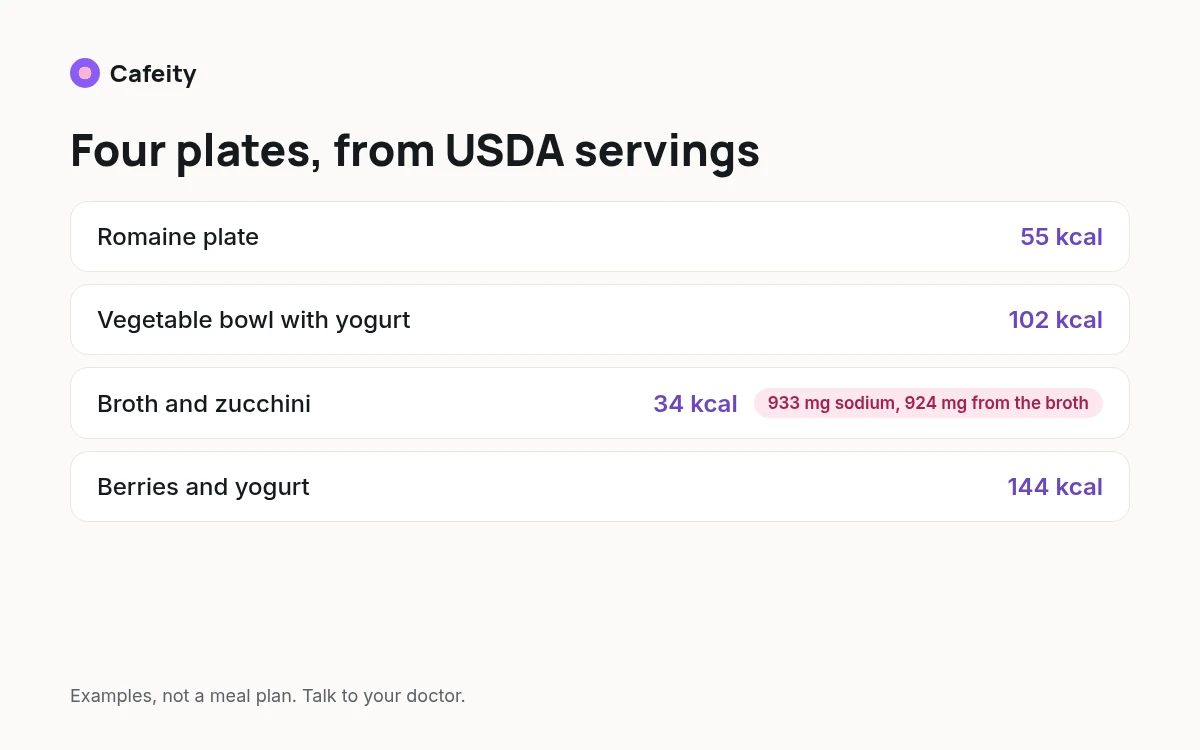
- Romaine plate (55 kcal, 5.6 g protein): shredded romaine, cucumber slices and a tomato, with an egg white as the protein part.
- Vegetable bowl with yogurt (102 kcal, 14.8 g protein): spinach, mushrooms and zucchini, with 100 g of plain nonfat Greek yogurt. The yogurt is the protein part, not one of the lowest-calorie foods.
- Broth and zucchini (34 kcal, 933 mg sodium, 924 mg of it from the broth): a cup of broth with sliced zucchini. It is not a protein meal; see the note on sodium below.
- Berries and yogurt (144 kcal, 17.1 g protein): strawberry halves with the 156 g yogurt portion. With diced watermelon instead, it is 141 kcal and 17.0 g protein.
For other protein foods to put on a plate, see high-protein foods and the protein food list. If a drink is easier than a plate, read protein shakes on a GLP-1.
Air-popped popcorn is a snack, and the cup is not the gram
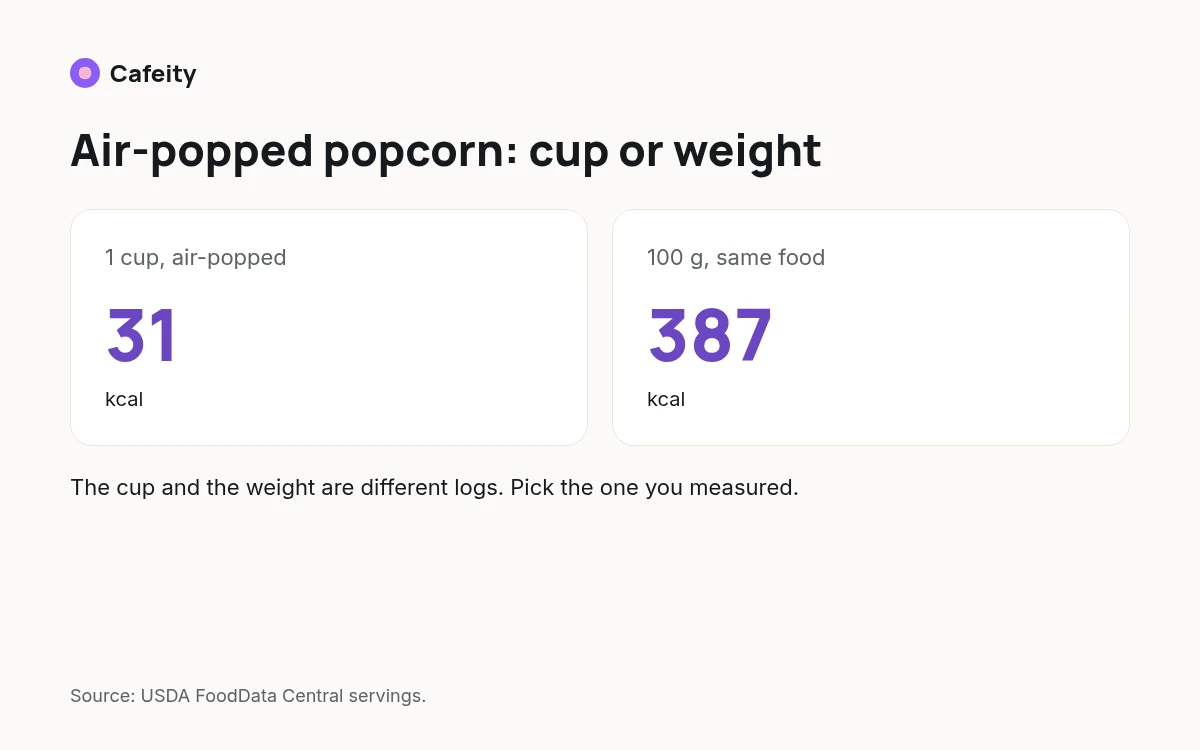
Air-popped popcorn (FDC 167959) looks like a high-volume food: 1 cup weighs only 8 g and is 31 kcal. By weight it is a different food: 100 g is 387 kcal. It is a snack beside these plates, not one of them. When you log it, log what you measured, the cup or the weight, not one for the other.
Sodium on the broth plate
One cup of ready-to-serve chicken broth (FDC 174536) is 15 kcal and 924 mg of sodium; with the zucchini, the plate is 933 mg. The 2020–2025 Dietary Guidelines say sodium should be less than 2,300 mg a day, and even less for children younger than 14. Broths differ a lot, so read the label on the carton or can. This page does not suggest a second cup.
A small appetite is not a full day
Each plate here stands on its own. They are not a menu, and they don't add up to a day of eating. On a day when appetite is small, what you can manage may change from meal to meal; what fits your day is a question for your doctor or a registered dietitian.
For more on eating when food doesn't appeal, read eating with no appetite and meal prep for small appetites. To shop for these plates, see the low-appetite grocery list, and for a wider view, what to eat on a GLP-1.
Log the plate in Cafeity
Log each part you actually ate in food logging. The GLP-1 food tracker and the protein tracker show what you entered. Cafeity keeps what you enter. It doesn't grade the plate, and this page sets no target.
Bring the record to your next appointment. For what to ask, see questions to ask your doctor.
Cafeity is on the App Store for iPhone.
Common questions
What is a high-volume, low-calorie meal?
A plate built mostly from watery foods, so a usual serving has few calories, often with one protein food beside them. Researchers describe this with energy density: calories per gram of food. This page shows four example plates, with USDA figures for each part.
Are these meals a good idea on a small appetite?
They are one way to put a plate together when a heavy meal does not appeal. They are examples, not a plan for you, and one plate is not a full day of eating. Ask your doctor or a registered dietitian what fits you.
Why is the cucumber portion half a cup?
Because that is the portion the USDA record stores. FoodData Central record 168409 lists 0.5 cup of cucumber slices at 52 g, which is 8 kcal.
Can I drink several cups of the chicken broth?
This page does not suggest more than one cup. One cup of ready-to-serve chicken broth (FDC 174536) has 924 mg of sodium, and the 2020–2025 Dietary Guidelines say less than 2,300 mg of sodium a day, and even less for children younger than 14. Broths differ, so read the label, and ask your doctor or a registered dietitian what fits you.
How do I track a plate like this in Cafeity?
Log each part you actually ate in food logging. Cafeity keeps what you enter and shows it in the food and protein trackers. It does not grade the plate, and this page sets no target. Cafeity is on the App Store for iPhone.
Sources
- USDA FoodData Central: one record per part, by the FDC ID in each table; read from the FoodData Central API on 23 Oct 2026.
- Rolls BJ. The relationship between dietary energy density and energy intake (definition of energy density).
- Dietary Guidelines for Americans, 2020–2025: needs met primarily from nutrient-dense foods and beverages; sodium.
How these pages are researched and corrected: editorial policy.
Related pages
Keep a food log you can look back on
Log the plate on the day. Your doctor or dietitian tells you what fits.