
High-protein foods on a GLP-1: what to log
A high-protein food does not cause weight loss by itself. The Dietary Guidelines call for a variety of protein foods, and the 2020–2025 edition says needs should be met primarily from foods. The adult ranges below are population goals, not a target Cafeity sets. Read the label, log what you eat, and ask your prescriber or a registered dietitian what fits you.
Disclosure: Cafeity is made by the author.
This page lists what the Dietary Guidelines count as protein foods, gives two foods checked in USDA FoodData Central, and shows how to keep a record of what you eat. It is not a meal plan.
Are high-protein foods good for weight loss?
Not by themselves. What fits you is a question for your prescriber or a registered dietitian.
What the Dietary Guidelines call protein foods
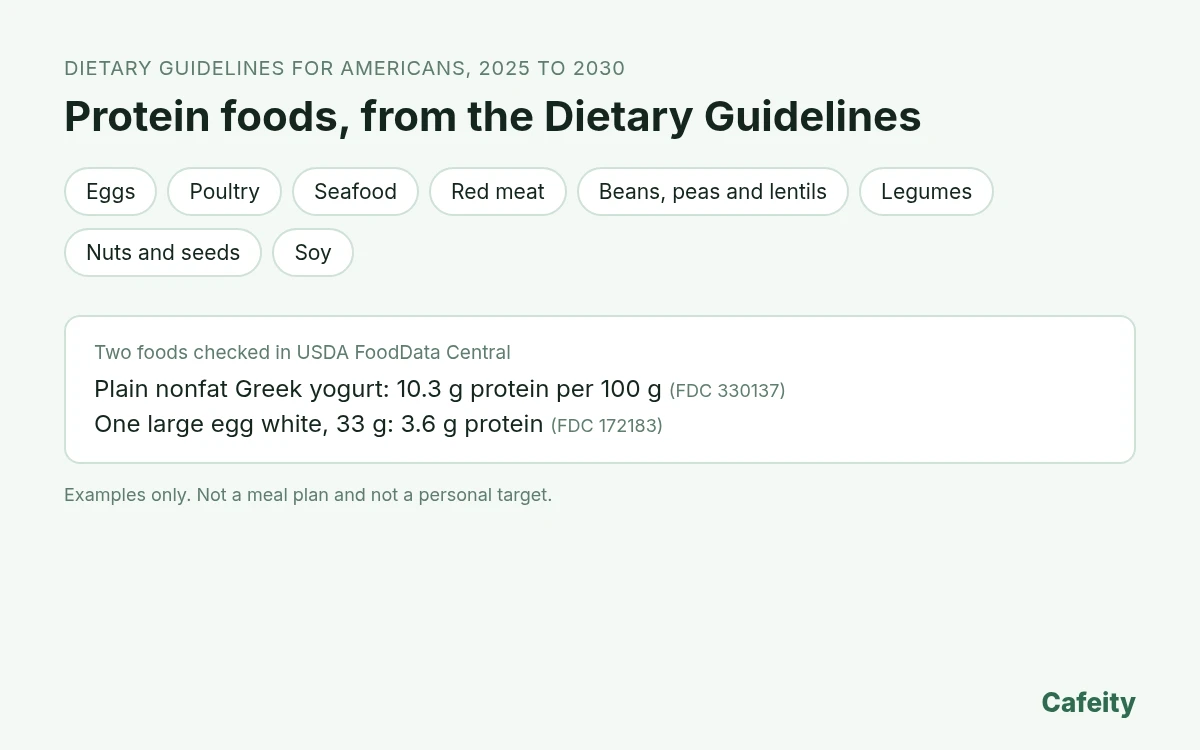
The Dietary Guidelines for Americans, 2025–2030, say to "prioritize high-quality, nutrient-dense protein foods as part of a healthy dietary pattern." They list:
- From animal sources: eggs, poultry, seafood and red meat.
- From plant sources: beans, peas, lentils, legumes, nuts, seeds and soy.
The 2025–2030 edition lists dairy as its own group, and says that when you consume dairy, to include full-fat dairy with no added sugars.
The earlier 2020–2025 edition described protein foods as including "lean meats, poultry, and eggs; seafood; beans, peas, and lentils; and nuts, seeds, and soy products." If a package calls a meat lean, check the label on that package; this page does not give a cutoff.
The 2020–2025 edition also says nutritional needs should be met primarily through foods, and that fortified foods and dietary supplements are useful in some cases when it is not possible otherwise to meet needs for one or more nutrients. If you are wondering about a drink rather than a meal, read protein shakes on a GLP-1 for how to read a shake's label.
Population numbers, not a prescription
Table A1-2 of the 2020–2025 Dietary Guidelines gives population figures for protein. For adults aged 19 and older:
| Dietary Guidelines 2020–2025, Table A1-2 | Women 19+ | Men 19+ |
|---|---|---|
| Protein, share of calories (Acceptable Macronutrient Distribution Range) | 10–35% | 10–35% |
| Protein, Recommended Dietary Allowance | 46 g a day | 56 g a day |
These numbers describe populations. They don't tell you what you need, and on a GLP-1 your appetite and what you can eat may change from week to week. The amount that fits you is a question for your prescriber or a registered dietitian.
Two foods checked in USDA FoodData Central
Two examples, read from the USDA FoodData Central database by their FDC IDs:
- Plain nonfat Greek yogurt (FDC 330137): 61 kcal and 10.3 g protein per 100 g. The 156 g portion stored on that record is 95 kcal and 16.1 g protein.
- One large egg white (FDC 172183, 33 g): 17 kcal and 3.6 g protein.
These are examples of how much protein a food holds, not portions to aim for. For more foods, see the protein food list. For ideas by meal or by cost, read high-protein breakfasts and protein on a budget. To fill out a plate around a protein food, see high-volume, low-calorie foods.
How to log protein in Cafeity
Enter what you actually ate in food logging. The GLP-1 protein tracker shows the protein from what you entered, next to the rest of your day. Cafeity keeps the record. It doesn't set a protein goal, grade a meal or build a meal plan.
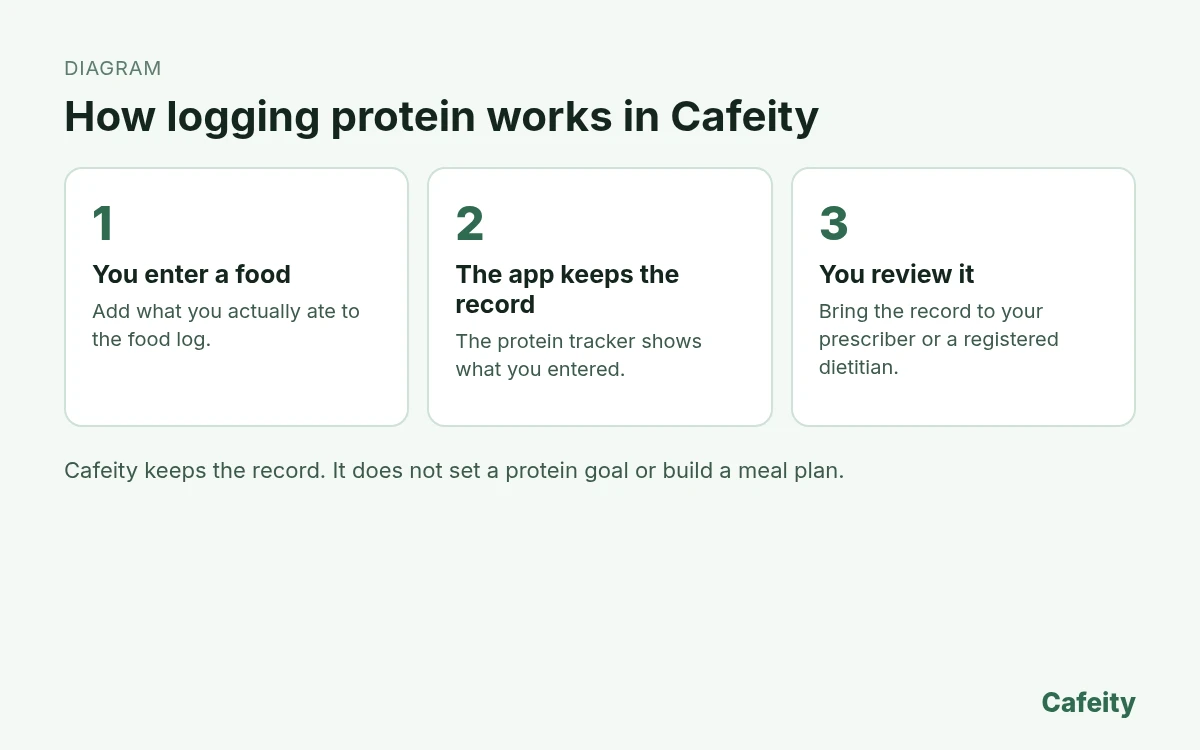
Bring the record to your next appointment. For what to ask, see questions to ask your doctor.
Cafeity is on the App Store for iPhone. There is no Android version yet.
Common questions
Are high-protein foods good for weight loss?
Not by themselves. A protein food is one part of what you eat, and this page lists what the Dietary Guidelines count as protein foods. Whether more protein fits you is a question for your prescriber or a registered dietitian.
How much protein do I need on a GLP-1?
This page cannot tell you, and Cafeity does not set a protein goal. For context, Table A1-2 of the 2020–2025 Dietary Guidelines gives population figures for adults 19 and older: protein at 10 to 35 percent of calories, and a Recommended Dietary Allowance of 46 g a day for women and 56 g a day for men. Those are population numbers, not a target for you. Ask your prescriber or a registered dietitian.
Which foods count as protein foods?
The 2025–2030 Dietary Guidelines name eggs, poultry, seafood and red meat from animal sources, and beans, peas, lentils, legumes, nuts, seeds and soy from plant sources. They list dairy as a separate group.
Is this a meal plan?
No. This page lists what the Dietary Guidelines count as protein foods and gives two USDA examples. It does not set portions, a calorie target or a protein target. For a plan that fits you, talk to your prescriber or a registered dietitian.
How do I track protein in Cafeity?
Enter what you actually ate in the food log, and the protein tracker shows the protein from what you entered. Cafeity keeps that record. It does not set a protein goal or build a meal plan. Cafeity is on the App Store for iPhone. There is no Android version yet.
Sources
- Dietary Guidelines for Americans, 2025–2030: protein foods and dairy (page 2).
- Dietary Guidelines for Americans, 2020–2025: needs met primarily through foods, the earlier protein-foods wording, and Table A1-2.
- USDA FoodData Central: FDC 330137 and FDC 172183, read from the FoodData Central API on 22 Oct 2026.
Related pages
Keep a record of what you eat
Log it on the day. Your prescriber or dietitian tells you what fits.