

Why breakfast matters on a small appetite
The 2025 joint advisory on nutrition and GLP-1 therapy notes that nausea often comes in the morning or after long periods without eating, and that some people get caught in a cycle of not eating because of nausea, which makes the symptoms worse. For them it suggests eating breakfast and then small meals every 3–4 hours, with enough fluids.2
Protein is the other reason. The advisory gives a practical target of 80 to 120 g a day and suggests eating protein-rich foods first in a meal, since appetite may run out before the plate does.2 Starting the day with 15 to 20 g makes the rest of the target far easier to reach.
Protein per serving, compared
| Food | Serving | Protein | Energy | USDA record |
|---|---|---|---|---|
| Firm tofu, scrambled | ½ cup (126 g) | 21.8 g | 181 kcal | FDC 172475 |
| Greek yoghurt, plain, nonfat | 1 pot (156 g) | 16.1 g | 95 kcal | FDC 330137 |
| Egg whites | ½ cup (122 g) | 13.3 g | 63 kcal | FDC 172183 |
| Scrambled eggs | 2 large eggs (122 g) | 12.2 g | 182 kcal | FDC 172187 |
| Cottage cheese, 2% | ½ cup (110 g) | 12.1 g | 92 kcal | FDC 328841 |
| Smoked salmon | 2 oz (57 g) | 10.4 g | 67 kcal | FDC 171985 |
| Kefir | 1 cup (243 g) | 8.7 g | 126 kcal | FDC 2705394 |
| Peanut butter | 2 tbsp (32 g) | 7.7 g | 189 kcal | FDC 2262072 |
| Milk, 2% | 1 cup (227 g) | 7.6 g | 114 kcal | FDC 321359 |
| Soy milk, unsweetened | 1 cup (243 g) | 6.9 g | 80 kcal | FDC 175215 |
| Mozzarella string cheese | 1 stick (28 g) | 6.6 g | 83 kcal | FDC 329370 |
| Oats, dry | ½ cup (40 g) | 5.3 g | 152 kcal | FDC 173904 |
| Whole-wheat toast | 1 slice (32 g) | 3.9 g | 81 kcal | FDC 335240 |
Drink it if you can't eat it
The joint advisory notes that foods with lower viscosity — thin liquids that flow easily — and higher moisture can leave the stomach faster.2 On a slow morning, a drink is often easier than a plate:
- Yoghurt smoothie: 150 g plain Greek yoghurt blended with 200 ml of 2% milk and a handful of frozen berries — about 22 g of protein from the dairy alone.1
- Kefir shake: a mug of kefir blended with half a banana and a tablespoon of peanut butter — about 12 g of protein.1
- A glass of milk or soy milk alongside whatever else you manage: about 7.6 g or 6.9 g per cup.1
- Ready-to-drink protein shakes vary widely. Read the label for protein per bottle, and choose ones without a long list of sweeteners if those upset your stomach.
Sip slowly rather than drinking it all at once.
Two-minute breakfasts, no cooking
- A pot of Greek yoghurt with a spoonful of nut butter or a few berries.
- Half a cup of cottage cheese with fruit, or on a cracker.
- Two hard-boiled eggs from a batch made at the weekend.
- A slice of whole-wheat toast with smoked salmon.
- A string cheese and a glass of milk.
- A jar of overnight oats made with milk and Greek yoghurt — about 17 g of protein.1
If even that is too much
- Start with three bites of the protein, then stop if you need to. Three bites is not nothing.
- Move breakfast later. A mid-morning breakfast still breaks the long overnight gap.
- Try savoury instead of sweet, or cold instead of hot, if smells bother you.
- Sip ginger or peppermint tea, which the joint advisory mentions for nausea.2
- Hold off on very fatty or high-fibre breakfasts in the first days of treatment if you are queasy; the advisory notes that avoiding them can help.2
For days when eating feels impossible, see eating with no appetite and nausea.
Making it a routine
Mornings go better when breakfast is already decided. Keep three or four options you know sit well, buy them every week (see the low-appetite grocery list), and prepare a few on Sunday: a batch of hard-boiled eggs, three jars of overnight oats, egg muffins in the freezer (see meal prep for small appetites). Eat at roughly the same time each day; regular, small meals at consistent times are on the advisory's list of habits to encourage.2
When to contact your prescriber
Keeping a record of it
Scan the barcode on a yoghurt pot or search a food, and Cafeity counts the protein against your daily target, alongside water, so you can see by lunchtime whether the morning did its job.

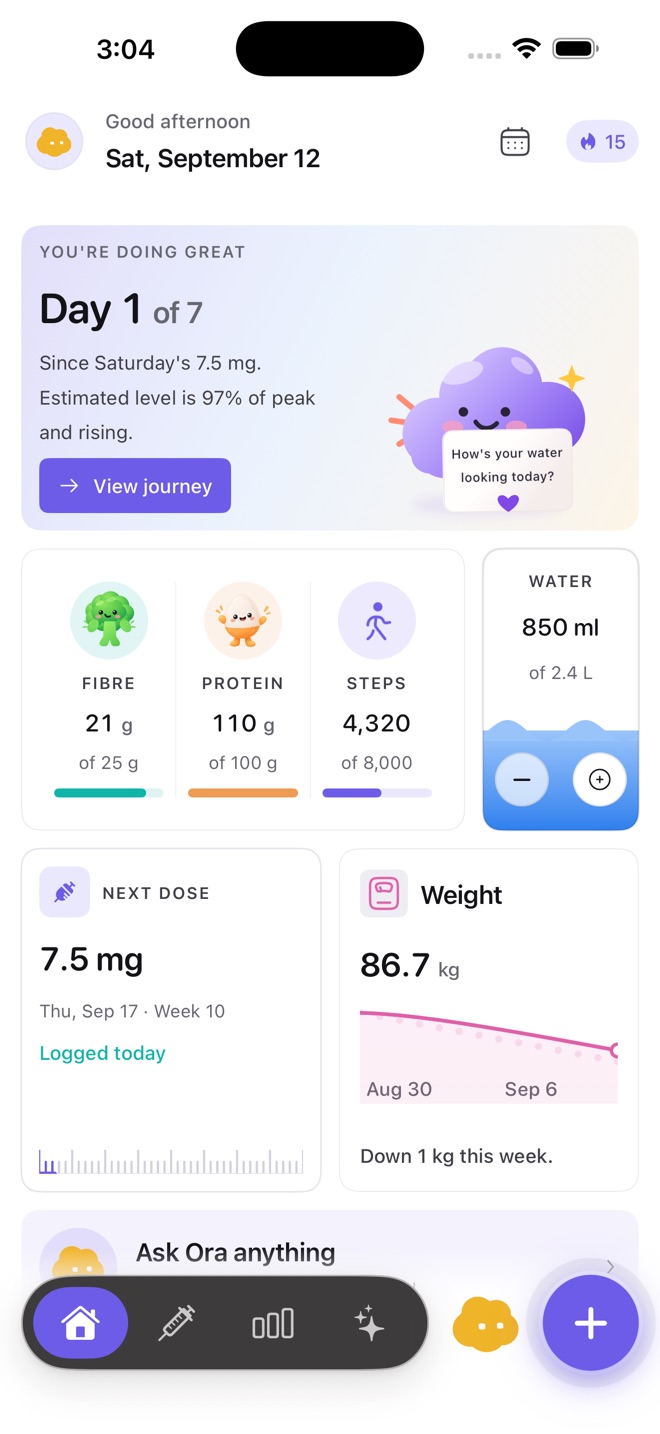
Screenshots: Cafeity for iPhone, version 1.1.
Common questions
What is a good high-protein breakfast when you have no appetite?
How much protein should I have at breakfast on a GLP-1?
Are smoothies a good idea on a GLP-1?
Should I skip breakfast if I am not hungry?
How much protein is in two eggs?
Sources
- FoodData Central US Department of Agriculture, Agricultural Research Service
- Nutritional priorities to support GLP-1 therapy for obesity: a joint advisory from the American College of Lifestyle Medicine, the American Society for Nutrition, the Obesity Medicine Association and The Obesity Society Mozaffarian D et al. 2025 (published in four journals)
- Tirzepatide injection for weight management and obstructive sleep apnoea — US prescribing information DailyMed, US National Library of Medicine, version published 2 September 2026
- Semaglutide injection and tablets for weight management — US prescribing information DailyMed, US National Library of Medicine, version published 30 June 2026
Written by the Cafeity team from the sources listed here. Figures from prescribing information are quoted as the label states them; trial results are averages from those trials, not predictions for any one person. This page has not yet been reviewed by a clinician — see the editorial policy for how pages are researched and corrected.