

How to use the list
Shop for the appetite you have this week, not the one you had before treatment. The 2025 joint advisory encourages regular, small meals at consistent times and warns against long gaps that leave you overly hungry; when nausea makes eating hard, it suggests small meals every 3–4 hours with enough fluids.1 It also gives a daily protein target of 80 to 120 g and suggests eating protein first.1 The list is grouped to make that easy: a protein, something to drink, and something gentle for every small meal.
Ready-to-eat protein
Greek yoghurt (plain) · Cottage cheese · Eggs (boil a batch) · Cheese portions or string cheese · Rotisserie chicken · Sliced deli turkey or chicken · Canned tuna or salmon · Tofu, firm or silken · Hummus · Frozen edamame.
| Food | Serving | Protein | Energy | USDA record |
|---|---|---|---|---|
| Canned tuna | 1 can, drained (165 g) | 32.1 g | 142 kcal | FDC 173709 |
| Rotisserie-style chicken breast | 3 oz (85 g) | 26.4 g | 140 kcal | FDC 171477 |
| Firm tofu | ½ cup (126 g) | 21.8 g | 181 kcal | FDC 172475 |
| Greek yoghurt | 1 pot (156 g) | 16.1 g | 95 kcal | FDC 330137 |
| Edamame | 1 cup (118 g) | 13.2 g | 129 kcal | FDC 168410 |
| Hard-boiled eggs | 2 large (100 g) | 12.6 g | 155 kcal | FDC 173424 |
| Deli turkey | 2 slices (56 g) | 12.2 g | 61 kcal | FDC 174572 |
| Cottage cheese | ½ cup (110 g) | 12.1 g | 92 kcal | FDC 328841 |
| String cheese | 1 stick (28 g) | 6.6 g | 83 kcal | FDC 329370 |
Ready-to-eat matters on low days: a pot to open or an egg to peel is easier than cooking. Keep two or three of these in the fridge at all times.
Drinkable and soft
Milk or soy milk · Kefir or drinkable yoghurt · Broth or a light soup · Frozen fruit for smoothies · Ready-to-drink protein shakes · Instant oats.
The joint advisory notes that thin, easy-flowing foods with more moisture can leave the stomach faster.1 A cup of milk has about 7.6 g of protein and a cup of kefir about 8.7 g.3 Broth-based soups count as fluids too. If you use ready-to-drink protein shakes, compare the protein per bottle on the label.
Gentle starches, fruit and vegetables
Crackers · Bread for toast · Microwave rice pouches · Potatoes · Plain pasta or noodles · Bananas.
Applesauce or fruit cups in juice · Melon or grapes · Frozen berries · Steam-in-bag frozen vegetables · Cucumber or cherry tomatoes · Avocados.
Plain crackers or toast are often the first thing that sits well on a queasy morning. The advisory notes that low-fibre vegetables and fruit, with their high moisture, can also move through faster.1 Frozen vegetables and fruit don't go off, which makes them ideal when you can't predict how much you'll eat.
Fibre helpers
Prunes or prune juice · Kiwi fruit · Pears · Chia seeds or ground flaxseed · Canned lentils or beans · Whole-grain crackers.
Constipation is common with weight loss, and the joint advisory encourages adequate fluids and fibre from foods to manage it.1 Add fibre gradually and drink with it. In the first few days of treatment, if you are queasy, the advisory notes that avoiding fatty or high-fibre foods can help, so bring these in once things settle.1 See GLP-1 constipation.
Fluids and comfort
Water and sparkling water · Ginger tea · Peppermint tea · Ice lollies · Oral rehydration sachets (ask a pharmacist) · Something you love, in a small portion.
Dehydration from severe nausea, vomiting or diarrhoea can cause acute kidney injury, the joint advisory warns, so keep fluids you like in the house.1 Ginger or peppermint tea is mentioned in the advisory for nausea, and "portion-controlled treats" are on its list of habits to encourage, not avoid.1 For electrolytes, see hydration on a GLP-1.
Buying less, wasting less
In the US, between 30 and 40% of the food supply is wasted, according to the USDA.4 A smaller appetite makes that easier to add to. Buy small packs, freeze what you won't eat in time, and know how long things keep:
| Food | Refrigerator | Freezer |
|---|---|---|
| Raw eggs in the shell | 3 to 5 weeks | Don't freeze in the shell |
| Hard-boiled eggs | 1 week | Don't freeze |
| Deli meat, opened | 3 to 5 days | 1 to 2 months |
| Cooked meat or poultry | 3 to 4 days | 2 to 6 months |
| Soups and stews | 3 to 4 days | 2 to 3 months |
| Chicken, tuna or egg salad | 3 to 4 days | Does not freeze well |
Those times are from FoodSafety.gov's cold storage chart.2 Cooked food should go in the fridge within 2 hours of cooking.5
When to contact your prescriber
Keeping a record of it
Scan a barcode or search a food and Cafeity counts protein, fibre and water against your targets — useful in a low-appetite week, when it is easy to fall short without noticing.

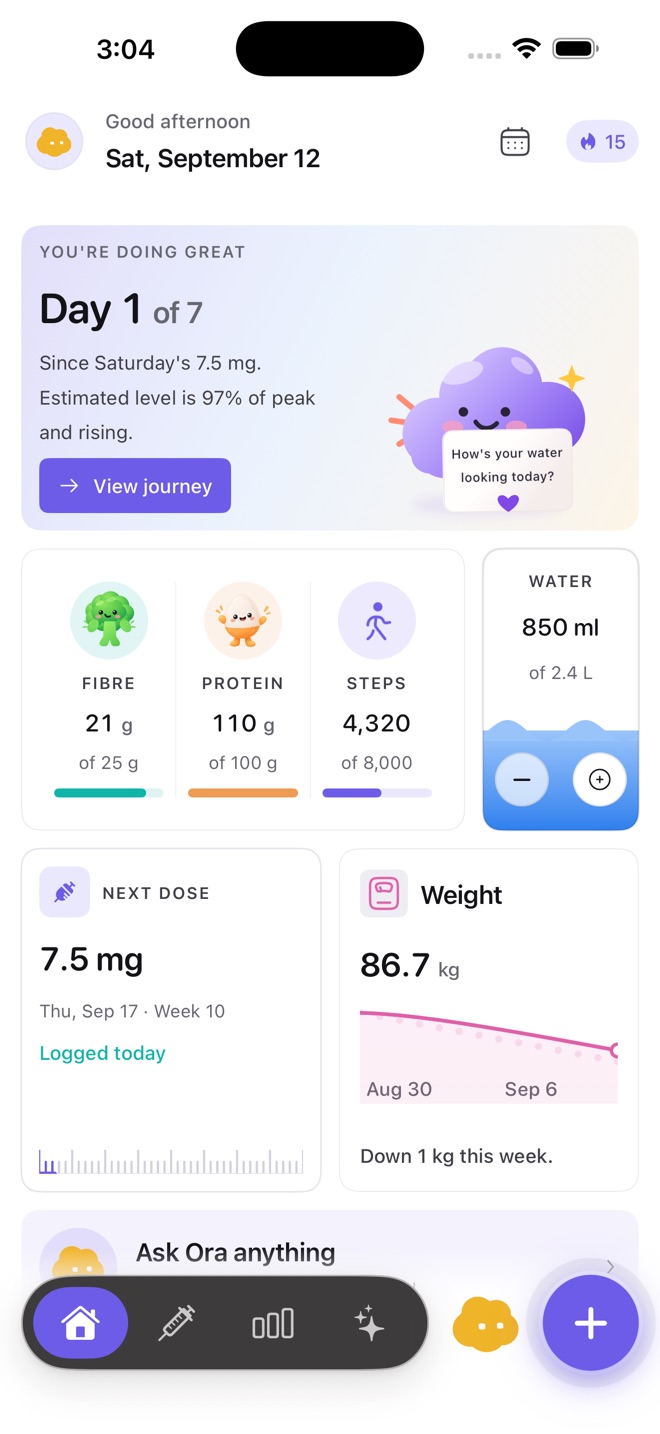
Screenshots: Cafeity for iPhone, version 1.1.
Common questions
What should I buy when I have no appetite on a GLP-1?
How long do hard-boiled eggs last in the fridge?
How long does cooked chicken keep?
What foods help with constipation on a GLP-1?
Is there a printable version of this grocery list?
Sources
- Nutritional priorities to support GLP-1 therapy for obesity: a joint advisory from the American College of Lifestyle Medicine, the American Society for Nutrition, the Obesity Medicine Association and The Obesity Society Mozaffarian D et al. 2025 (published in four journals)
- Cold food storage chart FoodSafety.gov, US Department of Health and Human Services
- FoodData Central US Department of Agriculture, Agricultural Research Service
- Food waste FAQs US Department of Agriculture
- Leftovers and food safety Food Safety and Inspection Service, US Department of Agriculture
- Tirzepatide injection for weight management and obstructive sleep apnoea — US prescribing information DailyMed, US National Library of Medicine, version published 2 September 2026
- Semaglutide injection and tablets for weight management — US prescribing information DailyMed, US National Library of Medicine, version published 30 June 2026
Written by the Cafeity team from the sources listed here. Figures from prescribing information are quoted as the label states them; trial results are averages from those trials, not predictions for any one person. This page has not yet been reviewed by a clinician — see the editorial policy for how pages are researched and corrected.