

How we worked it out
The US Bureau of Labor Statistics publishes average retail prices for a set of foods every month, collected in 75 urban areas for the Consumer Price Index. We took the US city average for August 2026, the latest available on 2 October 2026, for every protein-rich food it still tracks.1 For each, we took protein and energy from USDA FoodData Central for the food as bought — raw meat, dry beans, dry pasta — and worked out:
- Cost per 20 g of protein = price ÷ protein in the unit sold × 20. A dozen large eggs is 600 g of egg; a gallon of milk weighs about 3,904 g.2
- Calories per 20 g of protein, from the same USDA record.
Averages hide a lot: prices differ by region, store, brand and week, and sales change everything. BLS stopped publishing average prices for peanut butter and canned tuna in 2017, and its yoghurt series mixes every kind of yoghurt in small cups, so those are listed separately below without a price.
Twelve foods, priced
| Food | Average price | Protein per unit | 20 g protein costs | Calories per 20 g protein | Data |
|---|---|---|---|---|---|
| Dried beans | $1.63 per lb | 97 g | $0.34 | 324 kcal | APU0000714233 · FDC 175199 |
| Pasta, dry | $1.37 per lb | 59 g | $0.46 | 569 kcal | APU0000701322 · FDC 169736 |
| Milk, low-fat | $3.71 per gallon | 132 g | $0.56 | 254 kcal | APU0000FJ1101 · FDC 322228 |
| Eggs, large | $2.27 per dozen | 75 g | $0.60 | 228 kcal | APU0000708111 · FDC 171287 |
| Milk, whole | $4.23 per gallon | 128 g | $0.66 | 366 kcal | APU0000709112 · FDC 322892 |
| Rice, white, dry | $1.11 per lb | 32 g | $0.69 | 1,024 kcal | APU0000701312 · FDC 168877 |
| Chicken breast, boneless | $4.17 per lb | 102 g | $0.82 | 100 kcal | APU0000FF1101 · FDC 2646170 |
| Bread, white | $1.82 per lb | 43 g | $0.85 | 573 kcal | APU0000702111 · FDC 325871 |
| Cheddar cheese | $5.98 per lb | 106 g | $1.13 | 350 kcal | APU0000710212 · FDC 328637 |
| Ham, boneless | $5.38 per lb | 83 g | $1.30 | 177 kcal | APU0000704312 · FDC 168295 |
| Ground beef, regular | $6.92 per lb | 80 g | $1.74 | 283 kcal | APU0000703112 · FDC 2514744 |
| Ground beef, lean | $8.57 per lb | 82 g | $2.08 | 209 kcal | APU0000703113 · FDC 2514743 |
Cheap per gram isn't the whole story
Pasta, rice and bread look inexpensive per gram of protein, but you would need to eat a lot of them: about 569 kcal of pasta or 1,024 kcal of rice to get 20 g of protein. On a GLP-1, when a few bites may be all you manage, protein density matters as much as price.2
- Best value and dense: eggs, low-fat milk and boneless chicken breast are all inexpensive per 20 g and light on calories for the protein they carry.
- Inexpensive and filling: dried beans and lentils cost very little per gram of protein and bring fibre, but they are bulky; a small portion alongside a denser protein works well.
- Worth it in small amounts: cheddar and ham are fine value but come with more fat and, for ham, more salt.
The 2025 joint advisory encourages plant proteins such as beans, peas and lentils, plus dairy, seafood, eggs and lean poultry, and suggests red and processed meats in moderation.3
Eight more budget proteins
These are widely available and usually good value, but BLS does not publish an average price for them, so compare unit prices on the shelf. Protein and calories are from USDA.2
| Food | Serving | Protein | Calories per 20 g protein | USDA record |
|---|---|---|---|---|
| Tuna, canned in water | 1 can, drained (165 g) | 32.1 g | 88 kcal | FDC 173709 |
| Tofu, firm | ½ cup (126 g) | 21.8 g | 167 kcal | FDC 172475 |
| Salmon, canned | 3 oz, drained (85 g) | 19.6 g | 119 kcal | FDC 175175 |
| Greek yoghurt, plain, nonfat | 1 pot (156 g) | 16.1 g | 118 kcal | FDC 330137 |
| Edamame, frozen | 1 cup (118 g) | 13.2 g | 194 kcal | FDC 168410 |
| Cottage cheese, 2% | ½ cup (110 g) | 12.1 g | 153 kcal | FDC 328841 |
| Lentils, dried | ¼ cup dry (48 g) | 11.8 g | 286 kcal | FDC 172420 |
| Chickpeas, canned | ½ can, drained (126 g) | 8.9 g | 394 kcal | FDC 173800 |
Shopping tips that stretch protein
- Read the unit price on the shelf tag (per pound or per ounce), not the pack price.
- Buy family packs of chicken breast and freeze single portions; raw poultry pieces keep about 9 months in the freezer.4
- Cook dried beans or lentils in a big batch and freeze in small tubs.
- Choose store brands for staples such as eggs, milk, yoghurt, beans and canned fish.
- Keep shelf-stable protein — canned tuna, salmon and beans — for days when you can't face cooking.
- Waste less. A smaller appetite means more food goes off; see meal prep for small appetites.
Your overall food bill may shrink anyway: in a study of about 150,000 US households, those with someone taking a GLP-1 cut grocery spending by 5.3% on average within six months.5
Keeping a record of it
Cafeity counts protein from a barcode, a search or a photo against your daily target, so you can see which of your inexpensive staples are doing the work.

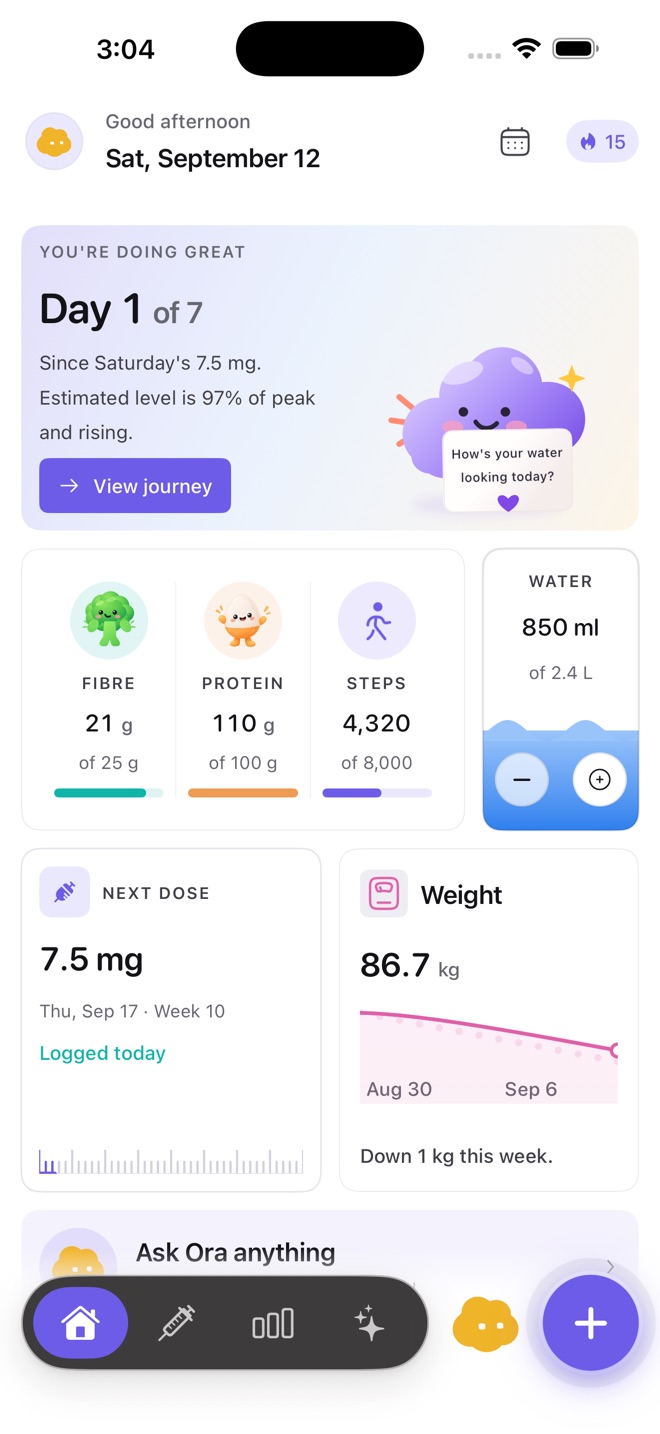
Screenshots: Cafeity for iPhone, version 1.1.
Common questions
What is the least expensive source of protein?
How much does 20 g of protein from chicken breast cost?
How much protein do I need on a GLP-1?
Are beans a good protein on a small appetite?
Why is canned tuna not in the price table?
Sources
- Average price data (US city average) for the Consumer Price Index — series used here: APU0000714233, APU0000FJ1101, APU0000708111, APU0000709112, APU0000701322, APU0000701312, APU0000FF1101, APU0000702111, APU0000710212, APU0000704312, APU0000703112, APU0000703113 US Bureau of Labor Statistics, data for August 2026 (retrieved through the BLS public data API, 2 October 2026)
- FoodData Central US Department of Agriculture, Agricultural Research Service
- Nutritional priorities to support GLP-1 therapy for obesity: a joint advisory from the American College of Lifestyle Medicine, the American Society for Nutrition, the Obesity Medicine Association and The Obesity Society Mozaffarian D et al. 2025 (published in four journals)
- Cold food storage chart FoodSafety.gov, US Department of Health and Human Services
- The No-Hunger Games: how GLP-1 medication adoption is changing consumer food demand Hristakeva S, Liaukonytė J, Feler L. Journal of Marketing Research, published online December 2025
Written by the Cafeity team from the sources listed here. Figures from prescribing information are quoted as the label states them; trial results are averages from those trials, not predictions for any one person. This page has not yet been reviewed by a clinician — see the editorial policy for how pages are researched and corrected.