

Why ordinary meal prep goes wrong on a GLP-1
Batch cooking for a full appetite produces portions that are too big and too many. The joint advisory on nutrition and GLP-1 therapy encourages regular, small meals at consistent times and discourages large meals, which are harder on a slower stomach.3 Prepping for that pattern — several small meals rather than a few big ones — also cuts waste. In the US, food waste is estimated at 30 to 40% of the food supply.4
Portion for the appetite you have
- Use small containers — about one to two cups. A full box you can't finish is a box you won't open.
- Put protein in every one. The joint advisory suggests protein first and a daily target of 80 to 120 g.3
- Think mini meals: a protein, a little starch and a vegetable, eaten every few hours.
- Keep sauces separate so food doesn't go soggy and you can go lighter on rich ones.
- Label and date everything before it goes in the fridge or freezer.
Seven prep-ahead mini meals
| Mini meal | One portion | Protein | Prep note |
|---|---|---|---|
| Egg muffins | 2 eggs, baked with vegetables | about 12 g | Freeze in pairs; reheat in the microwave |
| Chicken and rice bowl | 3 oz chicken, ½ cup cooked rice, vegetables | about 26 g | Keep the sauce separate |
| Overnight oats | ½ cup oats, ½ cup milk, ⅓ cup Greek yoghurt | about 17 g | Make three jars at once |
| Tofu stir-fry | ½ cup firm tofu with vegetables | about 22 g | Freezes less well; eat within days |
| Tuna salad | ½ can tuna with yoghurt instead of mayonnaise | about 16 g | 3 to 4 days; does not freeze well |
| Cottage cheese pot | ½ cup cottage cheese with fruit | about 12 g | Assemble on the day |
| Lentil soup | ¼ cup dry lentils per bowl | about 12 g | Freezes well in single bowls |
Each of these fits in a small container and works hot or cold. Rotate three or four a week rather than making all seven.
Cool, wrap and store
The USDA's Food Safety and Inspection Service sets out the basics:1
- Refrigerate within 2 hours of cooking, or within 1 hour if the room is above 90 °F.
- Cool quickly by dividing large amounts into shallow containers — a big pot of soup takes a long time to cool.
- Cover, wrap airtight or seal leftovers, then refrigerate or freeze them straight away.
- Eat refrigerated leftovers within 3 to 4 days, or freeze them.
How long it keeps
| Food | Refrigerator | Freezer |
|---|---|---|
| Cooked meat or poultry | 3 to 4 days | 2 to 6 months |
| Soups and stews | 3 to 4 days | 2 to 3 months |
| Egg casseroles and egg muffins | 3 to 4 days after baking | 2 to 3 months |
| Chicken, tuna or egg salad | 3 to 4 days | Does not freeze well |
| Hard-boiled eggs | 1 week | Don't freeze |
| Raw ground meat or poultry | 1 to 2 days | 3 to 4 months |
| Raw chicken or turkey pieces | 1 to 2 days | 9 months |
Frozen food stays safe indefinitely at 0 °F, but quality fades; the freezer times are for best quality.21
Thawing and reheating
- Thaw in the refrigerator, in cold water or in the microwave. Fridge thawing is slowest but safe throughout; food thawed in the fridge should be eaten within 3 to 4 days or can be refrozen.1
- Reheat to 165 °F (74 °C), checked with a food thermometer, and bring sauces, soups and gravies to a rolling boil.1
- Cover food in the microwave and stir or rotate it so it heats evenly.1
Wasting less
- Freeze on day one anything you won't eat by day four — not on day four.
- Freeze soups and stews in single-bowl tubs; salads and dressed dishes don't freeze well.2
- Keep a "use first" shelf at eye level in the fridge.
- Shop with the low-appetite grocery list and buy smaller packs.
Keeping a record of it
Save a prepped meal once in Cafeity — "save a combination you eat often and it becomes one tap" — and logging the same egg muffins or soup all week takes a second, with the protein counted each time.

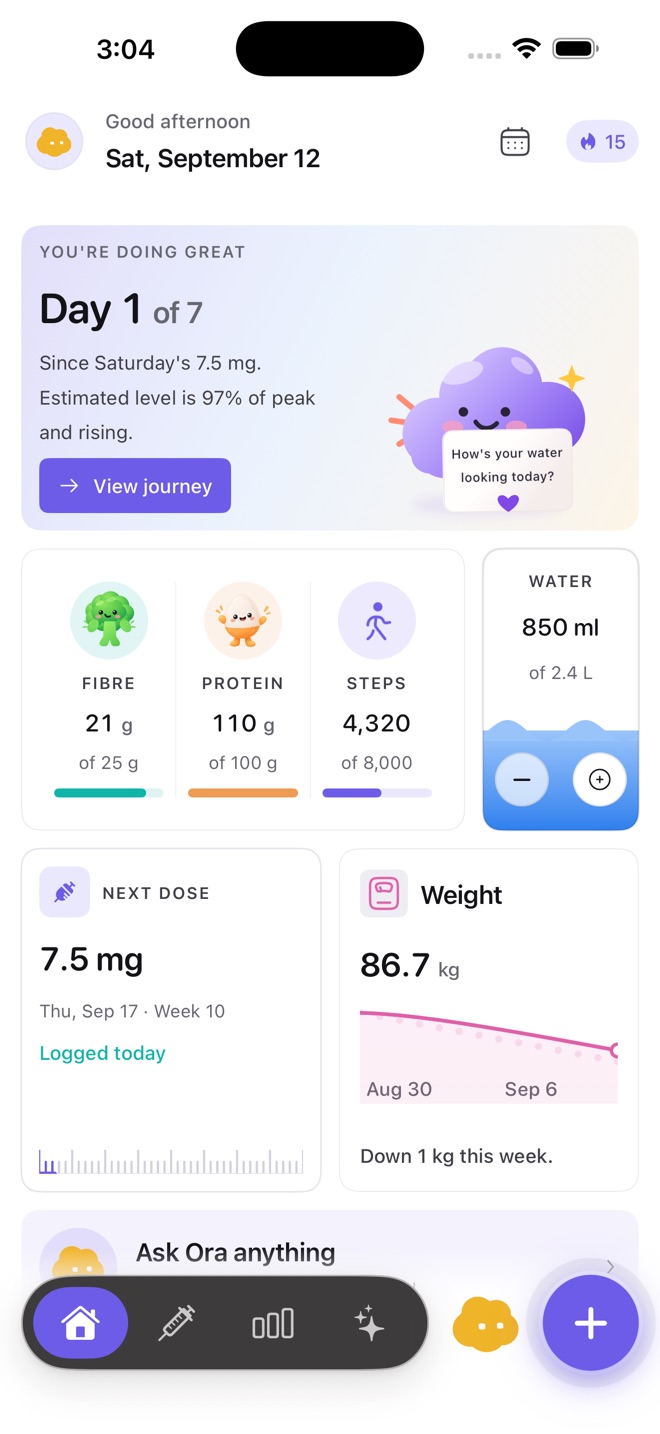
Screenshots: Cafeity for iPhone, version 1.1.
Common questions
How do I meal prep with a small appetite?
How long do meal-prepped meals last in the fridge?
Can I freeze meal-prepped food?
What temperature should I reheat leftovers to?
What are good high-protein meal prep ideas for a GLP-1?
Sources
- Leftovers and food safety Food Safety and Inspection Service, US Department of Agriculture
- Cold food storage chart FoodSafety.gov, US Department of Health and Human Services
- Nutritional priorities to support GLP-1 therapy for obesity: a joint advisory from the American College of Lifestyle Medicine, the American Society for Nutrition, the Obesity Medicine Association and The Obesity Society Mozaffarian D et al. 2025 (published in four journals)
- Food waste FAQs US Department of Agriculture
Written by the Cafeity team from the sources listed here. Figures from prescribing information are quoted as the label states them; trial results are averages from those trials, not predictions for any one person. This page has not yet been reviewed by a clinician — see the editorial policy for how pages are researched and corrected.