

What changes at home
Appetite is the obvious change, but tastes often shift too. The 2025 joint advisory on nutrition and GLP-1 therapy describes evidence of a general shift in preference away from sweet, savoury, starchy and high-fat foods.3 The weekly shop changes with it: in a study of about 150,000 US households, those with a GLP-1 user cut grocery spending by 5.3% on average within six months, and yogurt and fresh fruit were among the few categories that rose.4
Side effects tend to come and go, often around the start of treatment and changes to it; see when side effects start and how long they last. Expect good weeks and rough days, and expect your partner to know their own pattern better than you do.
What helps
- Ask, don't assume. "Do you want company, food, or to be left alone?" covers most days.
- Cook smaller and protein-forward. The joint advisory suggests protein-rich foods first in a meal; a dinner built around fish, chicken, eggs, tofu or beans suits you both.3
- Make leftovers normal. Plate smaller portions and box the rest without comment.
- Keep easy foods in. Yoghurt, eggs, crackers, soup and ginger tea for low-appetite days; see the low-appetite grocery list.
- Take over on rough days — the cooking smells, the school run, the dishes.
- Move together. An after-dinner walk is good company and kind to digestion; see walking more on a GLP-1.
- Back them up in company. Agree a signal for "please change the subject" before family dinners and parties.
- Celebrate the wins they choose to share, especially the ones a scale cannot show.
What doesn't help
Most unhelpful support is commentary. A 2020 international consensus statement found weight stigma is common and harmful, and that body weight is not entirely under voluntary control.5 Comments that police food or bodies tend to land as judgement, however they were meant.
| Instead of | Try |
|---|---|
| "Are you allowed to eat that?" | Nothing. Or "Want some?" |
| "You've barely touched your dinner." | "Want me to box that up for later?" |
| "You look so thin." | "How are you feeling?" |
| "Should you be taking more?" or "less?" | "What did your prescriber say?" |
| "Isn't that cheating?" | Nothing. It is a prescription. |
| Telling friends about their treatment | Letting them decide who knows; see telling people. |
On side-effect days
Nausea, tiredness and stomach upsets are the commonest side effects. On a rough day:
- Offer small, plain snacks and fluids rather than a full meal. The joint advisory suggests small meals every 3–4 hours with enough fluids when nausea makes eating hard, and mentions ginger or peppermint tea.3
- Keep strong cooking smells down, or eat somewhere else.
- Don't push food; do encourage sips of water.
- Know the warning signs below. They are the moment to stop being supportive in the background and help get a clinician involved.
Your feelings count too
It is normal to feel a bit left out when shared rituals change — the takeaway night, the big Sunday lunch, the bottle of wine. It is also normal to worry about side effects, or to feel unsure as your partner's body and confidence change. Say so, kindly, and look for new shared things: a walk, a class, cooking something new together.
You have company in this. In KFF's November 2025 poll, 37% of US adults said a close friend or family member was using a GLP-1.6 If you are thinking about treatment yourself, talk to your own clinician; prescription medicines are prescribed for one person and are never shared.
The practical side: supply, money and paperwork
These medicines can be expensive and sometimes hard to get: 56% of users in the KFF poll said they were difficult to afford.6 Helping with the admin can be real support — tracking refill dates, calling the pharmacy, keeping insurance paperwork together. See records for prior authorization renewals and insurance appeals.
When to contact your prescriber
Keeping a record of it
If your partner uses Cafeity and wants to share how things are going, the Visit Summary is a PDF they choose the contents of, shared only when they export it.
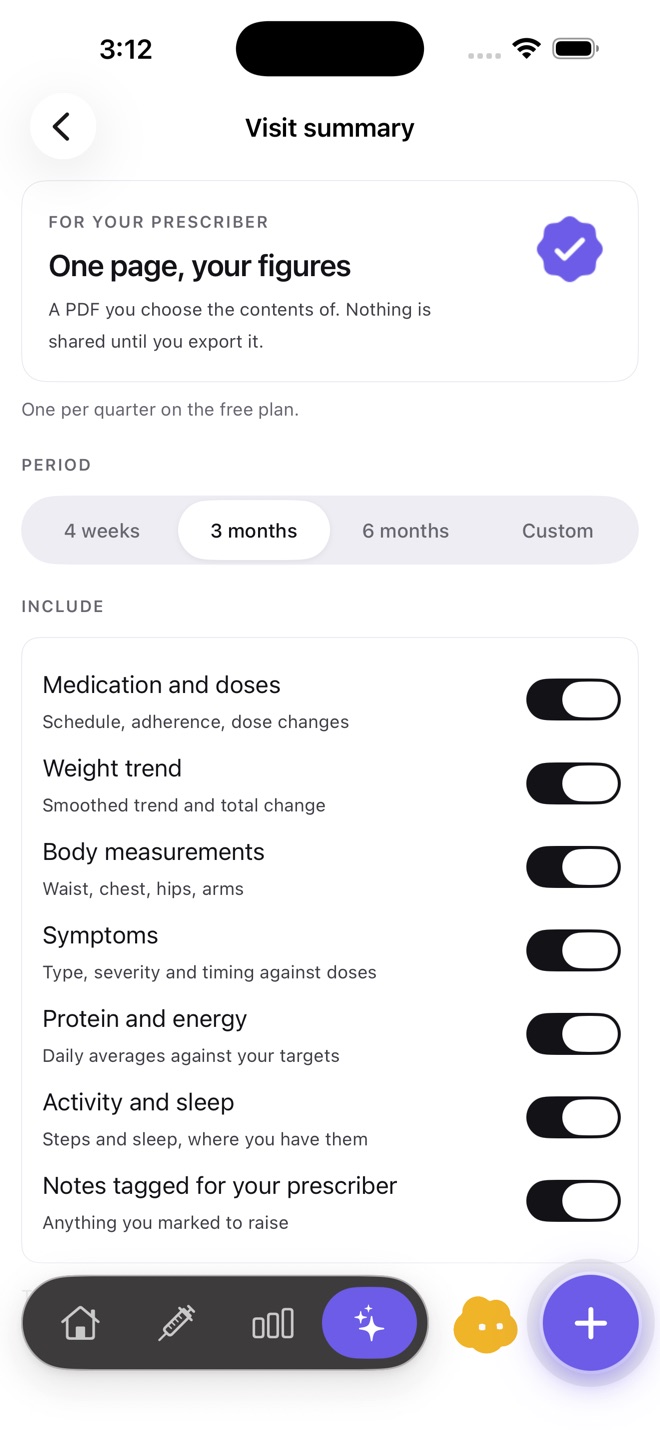
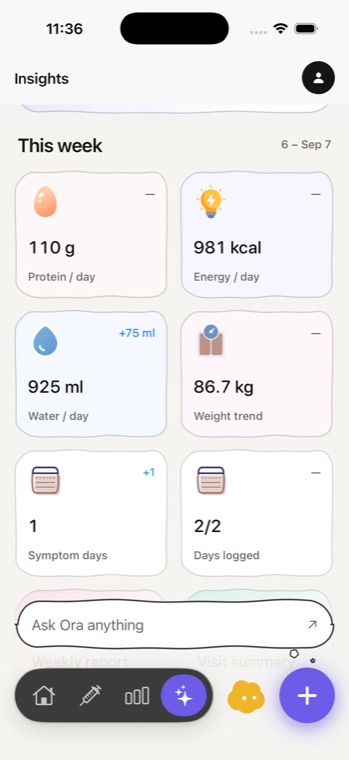
Screenshots: Cafeity for iPhone, version 1.1.
Common questions
How can I support my partner on a GLP-1?
What should I not say to someone on a GLP-1?
Should I change what I eat too?
Which side effects should I watch for?
Can I take my partner's GLP-1 medicine?
Sources
- Tirzepatide injection for weight management and obstructive sleep apnoea — US prescribing information DailyMed, US National Library of Medicine, version published 2 September 2026
- Semaglutide injection and tablets for weight management — US prescribing information DailyMed, US National Library of Medicine, version published 30 June 2026
- Nutritional priorities to support GLP-1 therapy for obesity: a joint advisory from the American College of Lifestyle Medicine, the American Society for Nutrition, the Obesity Medicine Association and The Obesity Society Mozaffarian D et al. 2025 (published in four journals)
- The No-Hunger Games: how GLP-1 medication adoption is changing consumer food demand Hristakeva S, Liaukonytė J, Feler L. Journal of Marketing Research, published online December 2025
- Joint international consensus statement for ending stigma of obesity Rubino F et al. Nature Medicine 2020;26:485–497
- Poll: 1 in 8 adults say they are currently taking a GLP-1 drug for weight loss, diabetes or another condition, even as half say the drugs are difficult to afford KFF Health Tracking Poll (fieldwork 27 October–2 November 2025, 1,350 US adults), 14 November 2025
Written by the Cafeity team from the sources listed here. Figures from prescribing information are quoted as the label states them; trial results are averages from those trials, not predictions for any one person. This page has not yet been reviewed by a clinician — see the editorial policy for how pages are researched and corrected.