
What prior authorization is
Prior authorization is a requirement by a health plan that a prescriber get approval before a medicine is covered. For GLP-1 medicines used for weight management, approvals are often time-limited, and continuing coverage can depend on a renewal with updated information. The criteria are set by each plan and change over time.
What is worth keeping
- Your starting weight, height and the date — measured the way you will measure later.
- Your weight over time as a trend, with dose changes marked.
- Every dose with its date — including late or missed ones.
- Side effects and anything that affected treatment.
- Changes to eating and activity, if your plan asks about them.
- Other conditions that may be relevant to coverage, as your prescriber advises.
Guidelines outside the US set similar expectations: in England, for example, NICE guidance asks prescribers to review treatment if less than 5% of starting weight has been lost after six months.12 A record that shows the trend clearly makes that review straightforward.
Getting your plan's exact criteria
Ask your insurer, or your prescriber's office, for the plan's prior authorization criteria and the renewal form for your specific medicine. Many plans publish these. Knowing the dates and measurements they want before your follow-up appointment saves a second visit.
Keeping a record of it
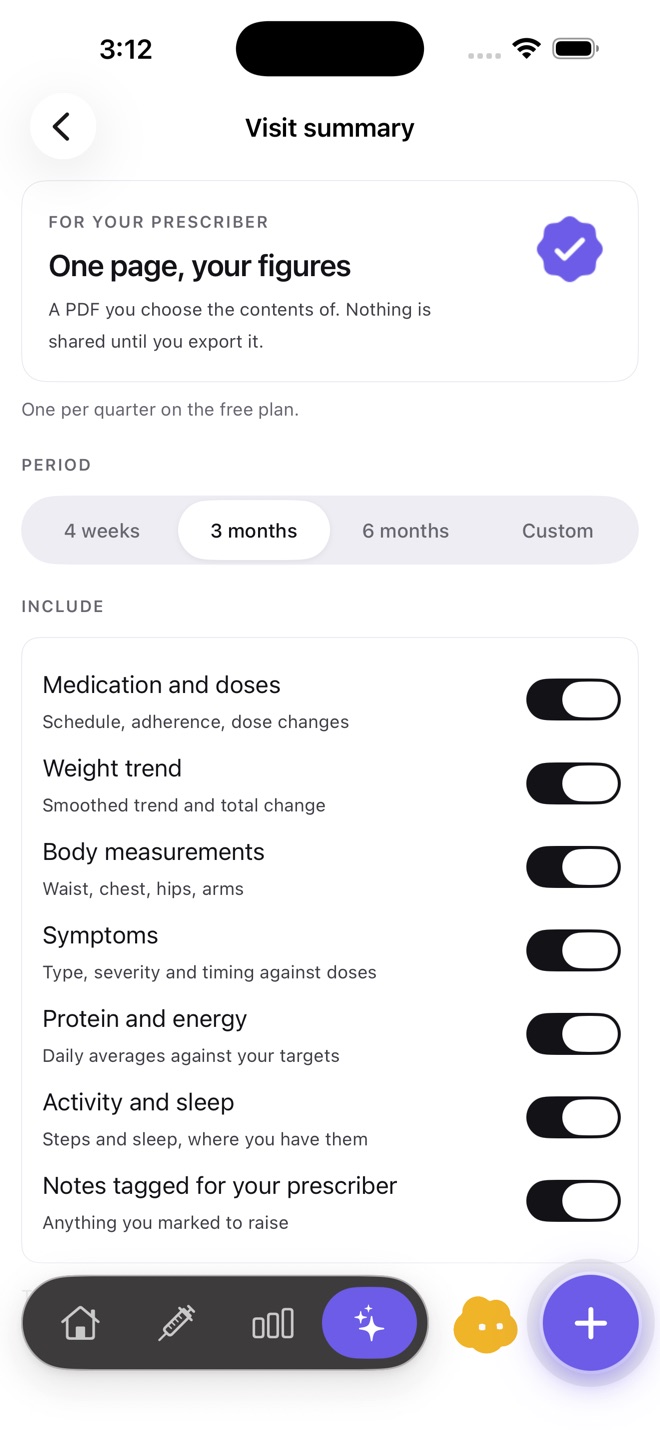
Cafeity's Visit Summary builds one page from any period you choose — medication and doses with adherence and dose changes, the weight trend and total change, symptoms against doses, and notes you tagged for your prescriber. It is a record, not a claim form, but it holds most of what a renewal asks for.

Common questions
What do insurers ask for to renew a GLP-1?
Can Cafeity send records to my insurer?
Sources
- Semaglutide for managing overweight and obesity (TA875) National Institute for Health and Care Excellence
- Tirzepatide for managing overweight and obesity (TA1026) National Institute for Health and Care Excellence
Written by the Cafeity team from the sources listed here. Figures from prescribing information are quoted as the label states them; trial results are averages from those trials, not predictions for any one person. This page has not yet been reviewed by a clinician — see the editorial policy for how pages are researched and corrected.