

Denials are common, and appeals are rare
KFF's analysis of 2024 data found that insurers selling on HealthCare.gov denied 19% of in-network claims — about 85 million. Consumers appealed fewer than 1% of those denials, and insurers upheld 66% of the denials that were appealed.3 Put the other way round, about a third of appealed denials were not upheld.
Those figures cover every kind of claim, not just medicines, and come from marketplace plans only. Still, they make two points: appealing is unusual, and it is not hopeless.
Start with the denial letter
The letter tells you what you are arguing against. Look for:
- The reason. Common ones include "not medically necessary", criteria not met, a drug you must try first (step therapy), the medicine not being on the formulary, a quantity limit, missing paperwork, or the benefit being excluded from your plan altogether.
- The policy it relies on. Ask for the plan's written coverage criteria for your medicine so you can answer them point by point.
- The deadline and the address for appeals.
An exclusion — a plan that does not cover a type of medicine at all — is a different problem from criteria you have not yet documented. If your plan excludes weight-management medicines, ask your prescriber whether another approved use applies to you, and check your options at the next enrolment period.
What coverage criteria usually look at
Plans tend to build their criteria on a medicine's approved uses. The weight-management labels approve these medicines alongside a reduced-calorie diet and increased physical activity for adults with obesity, or with overweight and at least one weight-related condition. The semaglutide label also covers reducing the risk of major cardiovascular events in adults with established cardiovascular disease and obesity or overweight, and the tirzepatide label covers moderate to severe obstructive sleep apnoea in adults with obesity.45
On top of that, plans add their own rules: BMI thresholds, documented diet and activity programmes, medicines tried first, and a minimum response to renew. Only your plan's written policy says which apply to you, so get it before you write anything.
The records that help
| Record | Why it helps | Where it comes from |
|---|---|---|
| Denial letter and Explanation of Benefits | States the reason you must answer and the deadline | Your plan |
| The plan's written coverage criteria | Lets you answer point by point | Your plan — ask for it |
| Letter of medical necessity | Your prescriber explains why this medicine, for you, now | Your prescriber |
| Dated weight, height and BMI | Shows thresholds were met, and the trend since starting | Clinic records, your own log |
| Related diagnoses | Many criteria depend on conditions such as type 2 diabetes, high blood pressure, sleep apnoea or heart disease | Clinic records, test results, sleep studies |
| Earlier weight-management attempts | Answers "lifestyle tried first" criteria | Programme records, your notes with dates |
| Medicines tried before | Answers step-therapy rules | Pharmacy and prescriber records |
| Your treatment record | Shows doses taken as prescribed, side effects and response | Your log, such as a one-page summary |
| Notes of every call | Date, name, reference number and what was said | You |
HealthCare.gov's own list of what to include is similar: the Explanation of Benefits forms or letters, a copy of your appeal request, any documents with additional information, records of phone conversations with the insurer, and correspondence from your doctor.1
The process and the deadlines
- File an internal appeal within 180 days (6 months) of receiving the denial notice.1
- The plan must decide within 30 days for a service you have not received yet, or 60 days for one you already have. In an urgent case, the decision must come as quickly as your condition requires, and at least within 4 business days.1
- If it is urgent, you can ask for an external review at the same time as the internal appeal.1
- If the denial is upheld, file a written request for external review within 4 months of the final decision. A standard review is decided within 45 days and an expedited one within 72 hours, and your insurer is required by law to accept the reviewer's decision. It is free under the federal HHS-administered process; elsewhere the charge cannot be more than $25.2
These are the federal rules for most private plans. Medicare, Medicaid and some employer plans have their own processes; the denial letter should say which applies.
Writing the appeal letter
Keep it short, factual and organised around the plan's own criteria. A structure that works:
- Who and what: your name, member ID, claim or reference number, the medicine by generic name, and the date of the denial.
- What you are asking for: "I am appealing the denial of coverage for … and ask the plan to approve it."
- Why the decision should change: each criterion in turn, with the document that answers it.
- What is enclosed: a numbered list matching your documents.
- Contact details and your prescriber's details.
Send it in a way you can track, keep a copy of everything, and diary both deadlines.
At renewal time
Approvals are often time-limited, and a renewal can ask for evidence of response. A continuous record — doses, weight as a trend, side effects — makes renewals faster and appeals easier. See records for prior authorization renewals for what renewals tend to ask.
Keeping a record of it
Cafeity's Visit Summary turns any period of your log into one page: doses and adherence, the weight trend and total change, symptoms against doses, and notes for your prescriber. It is a record for your prescriber, not a claim form — Cafeity never sends anything to an insurer.
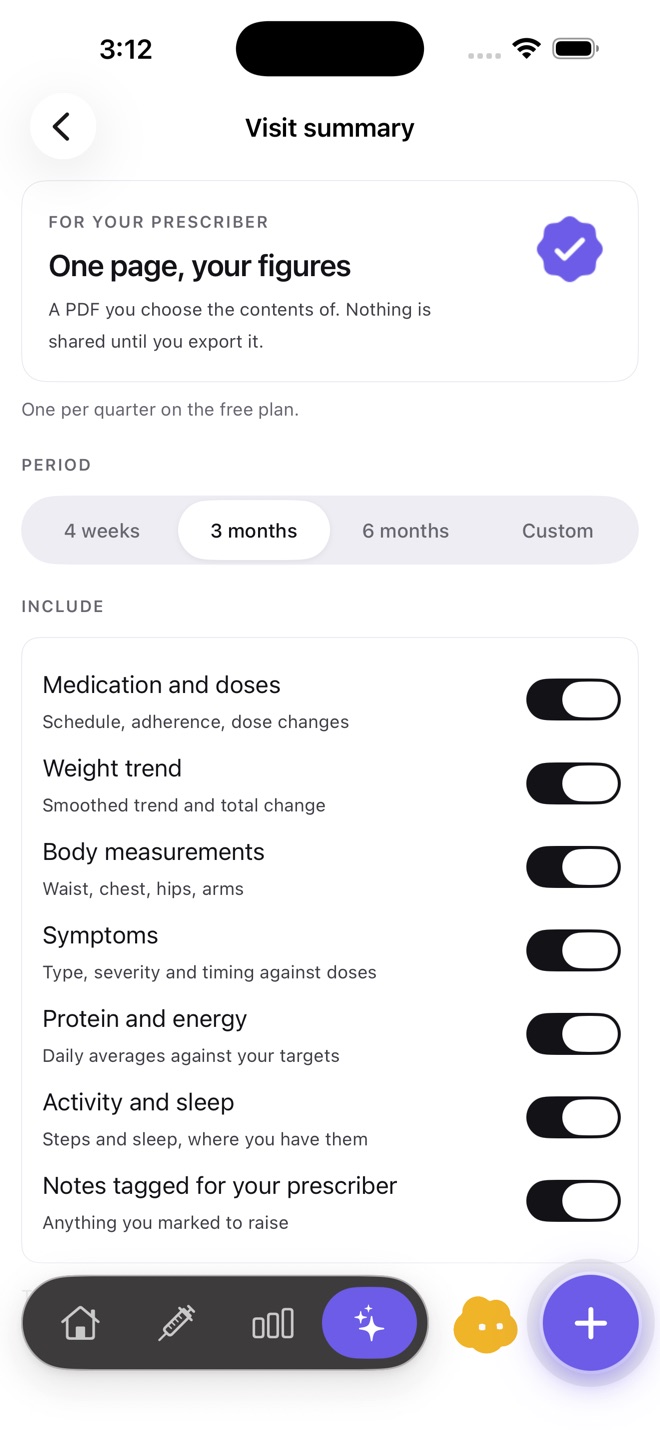

Screenshots: Cafeity for iPhone, version 1.1.
Common questions
How do I appeal a GLP-1 insurance denial?
How long does an insurance appeal take?
Do appeals ever work?
What is a letter of medical necessity?
Does external review cost anything?
Can Cafeity send my records to my insurer?
Sources
- Internal appeals HealthCare.gov, US Centers for Medicare & Medicaid Services
- External review HealthCare.gov, US Centers for Medicare & Medicaid Services
- Claims denials and appeals in ACA Marketplace plans in 2024 KFF, 24 March 2026
- Semaglutide injection and tablets for weight management — US prescribing information DailyMed, US National Library of Medicine, version published 30 June 2026
- Tirzepatide injection for weight management and obstructive sleep apnoea — US prescribing information DailyMed, US National Library of Medicine, version published 2 September 2026
Written by the Cafeity team from the sources listed here. Figures from prescribing information are quoted as the label states them; trial results are averages from those trials, not predictions for any one person. This page has not yet been reviewed by a clinician — see the editorial policy for how pages are researched and corrected.