

Why the in-between is tricky
Size changes rarely happen evenly. Waist and hips often change first, so trousers loosen before tops do, and a size that fits in one brand doesn't in the next. Buying a full wardrobe at each stage gets expensive quickly, and clothes bought for a size you pass through in two months are clothes you barely wear.
The answer is a small, flexible wardrobe for the transition, and knowing your measurements rather than a size label. See how to measure your waist, hips and chest.
Build a small transitional wardrobe
- Two or three bottoms with give: drawstring or elasticated waists, stretch denim, wrap or pull-on skirts.
- Four or five tops in forgiving cuts: knits, wrap styles, shirts worn loose or tucked.
- One layer that hides a lot: a cardigan, an overshirt or an unstructured jacket.
- A belt with room to grow — or a belt you can punch extra holes in.
- Underwear and bras that fit now. Get re-measured as you go; badly fitting basics are uncomfortable all day.
- Secondhand for the in-between sizes, so you aren't paying full price for clothes you'll wear for a season.
Alter, belt or pass on?
| How much too big | Usually worth | Why |
|---|---|---|
| A little loose | A belt, or wearing it as it is | Many cuts look fine slightly relaxed |
| About a size | Taking in the waist and side seams | Usually a straightforward alteration on well-made trousers, skirts and shirts |
| More than a size | Passing it on | Shoulders, armholes and proportions no longer fit, and those are hard to alter |
| Something you love | Asking a tailor, or keeping it as a memento | Some pieces are worth the cost of remaking |
Buying online when your size is a moving target
- Measure yourself — chest, waist and hips — and compare with each brand's size chart rather than relying on your usual size.
- Read the fabric: a little elastane means more forgiveness as you change.
- Check the returns policy before you buy, and order one item first from a new brand.
- Note what fits — brand, size and the date — so the next order is easier.
Pass clothes on, not to landfill
The EPA estimates that 17 million tons of textiles were generated as municipal waste in the US in 2018, 5.8% of all municipal waste. Only 14.7% of textiles were recycled — 13% for clothing and footwear — and 11.3 million tons went to landfill.1 Clothes that stop fitting you are an easy place to do better:
- Resell good pieces through consignment shops or resale apps.
- Swap with friends going through the same thing, or at a local clothing swap.
- Donate clean, wearable clothes to charity shops or shelters.
- Recycle worn-out textiles at a textile collection point rather than putting them in the bin.
Keeping the cost down
- Set a small monthly clothing budget for the transition, rather than one big shop at each new size.
- Prioritise what you wear every day — trousers, underwear, bras, one pair of comfortable shoes — over occasion wear.
- Sell before you buy. Listing two things that no longer fit often pays for the next piece that does.
- Hold off on expensive, structured pieces — coats, suits, tailored jackets — until your size has been steady for a while.
- Rent, borrow or buy secondhand for one-off events: a wedding, an interview or a party in the middle of the change does not need a new outfit at full price.
If you dress for work, a few neutral, interchangeable pieces in stretch fabrics go much further than a full set in each size. Keeping a note of your measurements and what fits — brand, size, date — saves returns and impulse buys.
Comfort, confidence and the old clothes
Some people keep one "before" piece as a reminder; others prefer to let everything go. Both are fine. Clothes that fit — not clothes in a particular size — are what make the in-between comfortable, and noticing them fit is one of the non-scale wins worth writing down. If you are taking progress photos, keep one outfit unchanged for them so the photos stay comparable.
Keeping a record of it
Cafeity keeps your waist, hips and chest measurements alongside your weight trend, so your current numbers are on your phone when you are in a changing room or filling in a size chart.

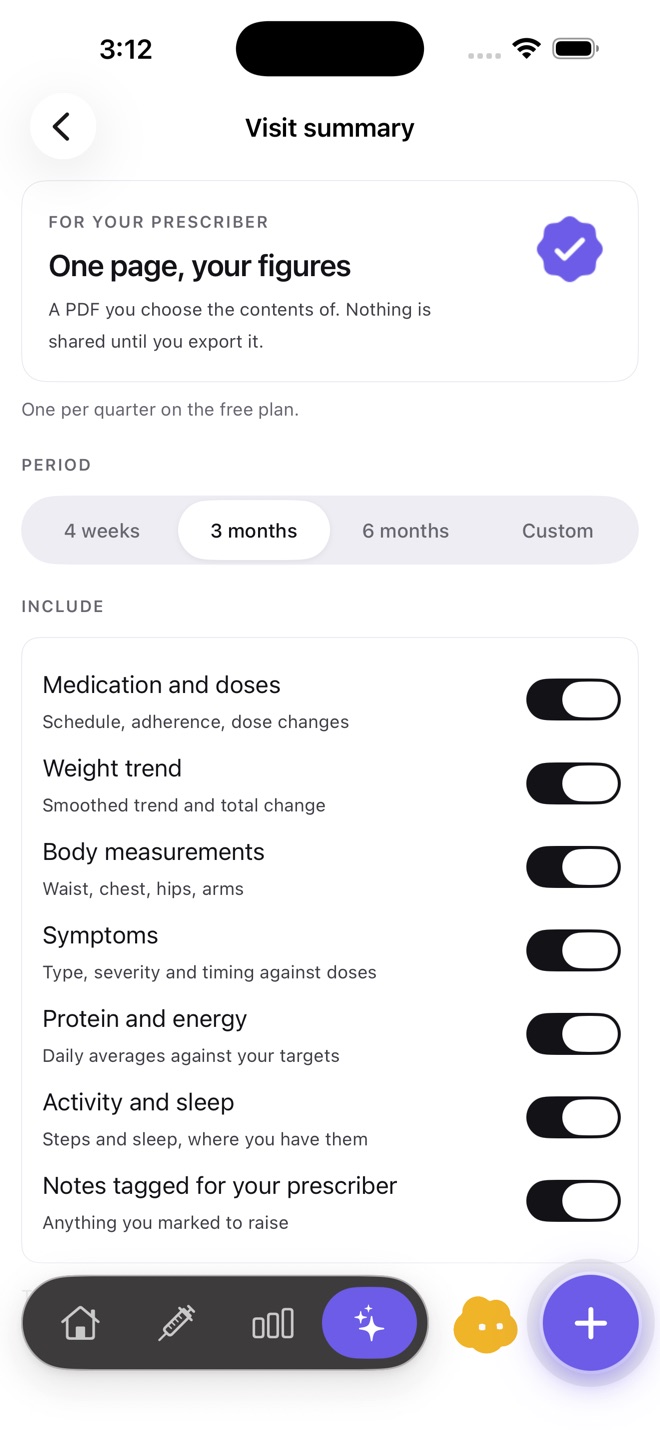
Screenshots: Cafeity for iPhone, version 1.1.
Common questions
Should I buy new clothes while losing weight on a GLP-1?
Can clothes be taken in a size?
How do I find my size when buying clothes online?
What should I do with clothes that no longer fit?
How much clothing gets recycled in the US?
Sources
- Textiles: material-specific data (Facts and Figures about Materials, Waste and Recycling) US Environmental Protection Agency
Written by the Cafeity team from the sources listed here. Figures from prescribing information are quoted as the label states them; trial results are averages from those trials, not predictions for any one person. This page has not yet been reviewed by a clinician — see the editorial policy for how pages are researched and corrected.