
What each label allows
| Medicine and form | In the fridge | Out of the fridge |
|---|---|---|
| Semaglutide single-dose pen or syringe | 2–8°C | Before the cap is removed, 8–30°C for up to 28 days |
| Semaglutide multi-use pen | 2–8°C before first use | After first use, 15–30°C or in the fridge for up to 56 days |
| Semaglutide tablets | — | 20–25°C (brief 15–30°C allowed), in the original bottle to protect from moisture |
| Tirzepatide single-dose pen or vial | 2–8°C | Up to 30°C for a total of 21 days |
| Tirzepatide multi-dose pen or vial | 2–8°C or room temperature | Up to 30°C; discard after 30 days or 4 weekly doses |
| Dulaglutide single-dose pen | 2–8°C | Up to 30°C for a total of 14 days |
| Orforglipron tablets | — | 20–25°C (brief 15–30°C allowed) |
Sources: prescribing information.1234
Two practical consequences: a pen that has been left in a hot car or frozen in a hold should not be used, and a trip shorter than the label's room-temperature allowance may not need cooling at all — check your own product.
Flying
In the United States, the TSA allows medically necessary liquids, medicines and creams in quantities above 3.4 oz (100 ml) in carry-on bags; tell the officer you have them, and they will be screened separately. Injectable medicines and their accessories, including needles, are allowed after screening. Ice packs and gel packs used to keep medicines cool are allowed, including when partly melted.567 Other countries have their own rules — check before you fly.
- Keep medicines in your hand luggage. Aircraft holds can freeze, and checked bags go missing.
- Carry the original packaging and a copy of your prescription or a letter from your prescriber, especially abroad.
- Pack spare needles and a small sharps container.
- Never share a pen, even with a new needle — the labels warn this can spread blood-borne infections.1
Dose day across time zones
A weekly injection does not have to happen at the same hour, but the labels do set rules for changing the day and for late doses, and they differ between medicines. Before a long trip, ask your prescriber or pharmacist how to handle your dose day, and write the plan down. Cafeity records the dose when you log it, so a changed day shows up in the record rather than disappearing from memory.
Eating while away
Unfamiliar food, bigger portions and more alcohol are the usual travel triggers for nausea, reflux and diarrhoea. Smaller, plainer meals and plenty of fluids help — see eating out and hydration.
Keeping a record of it
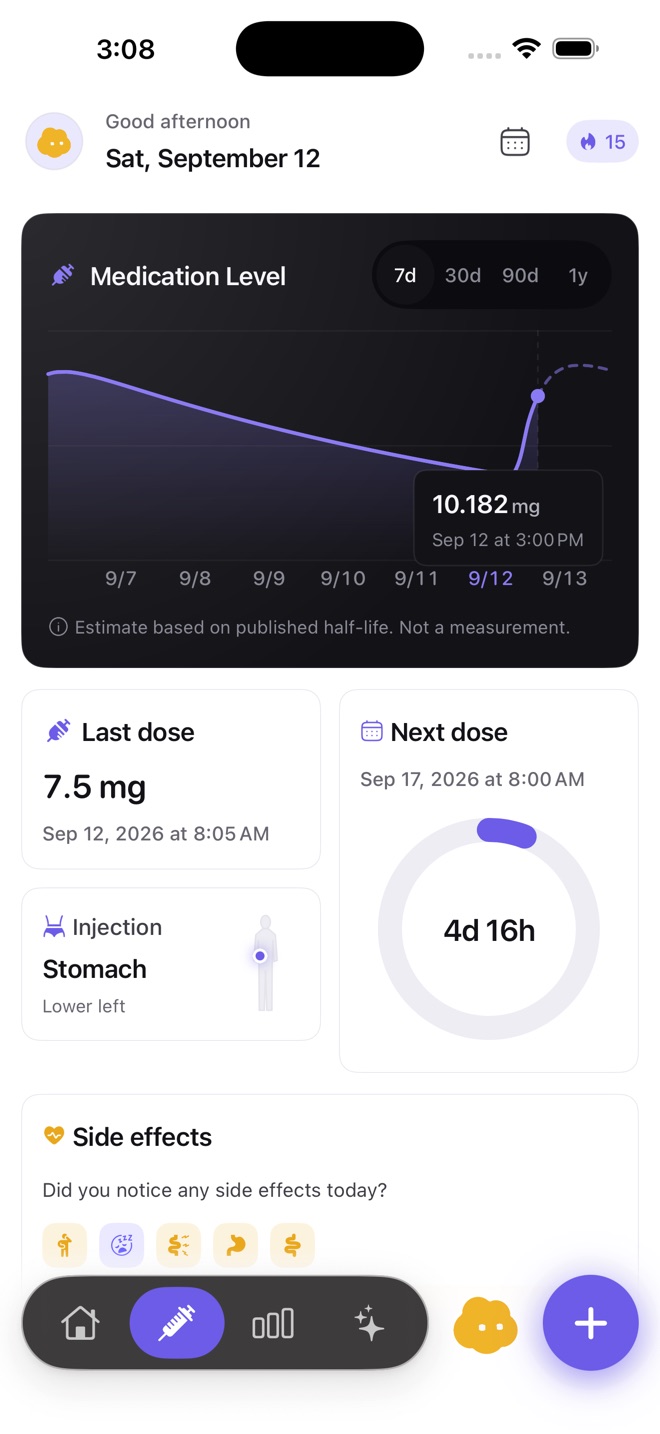
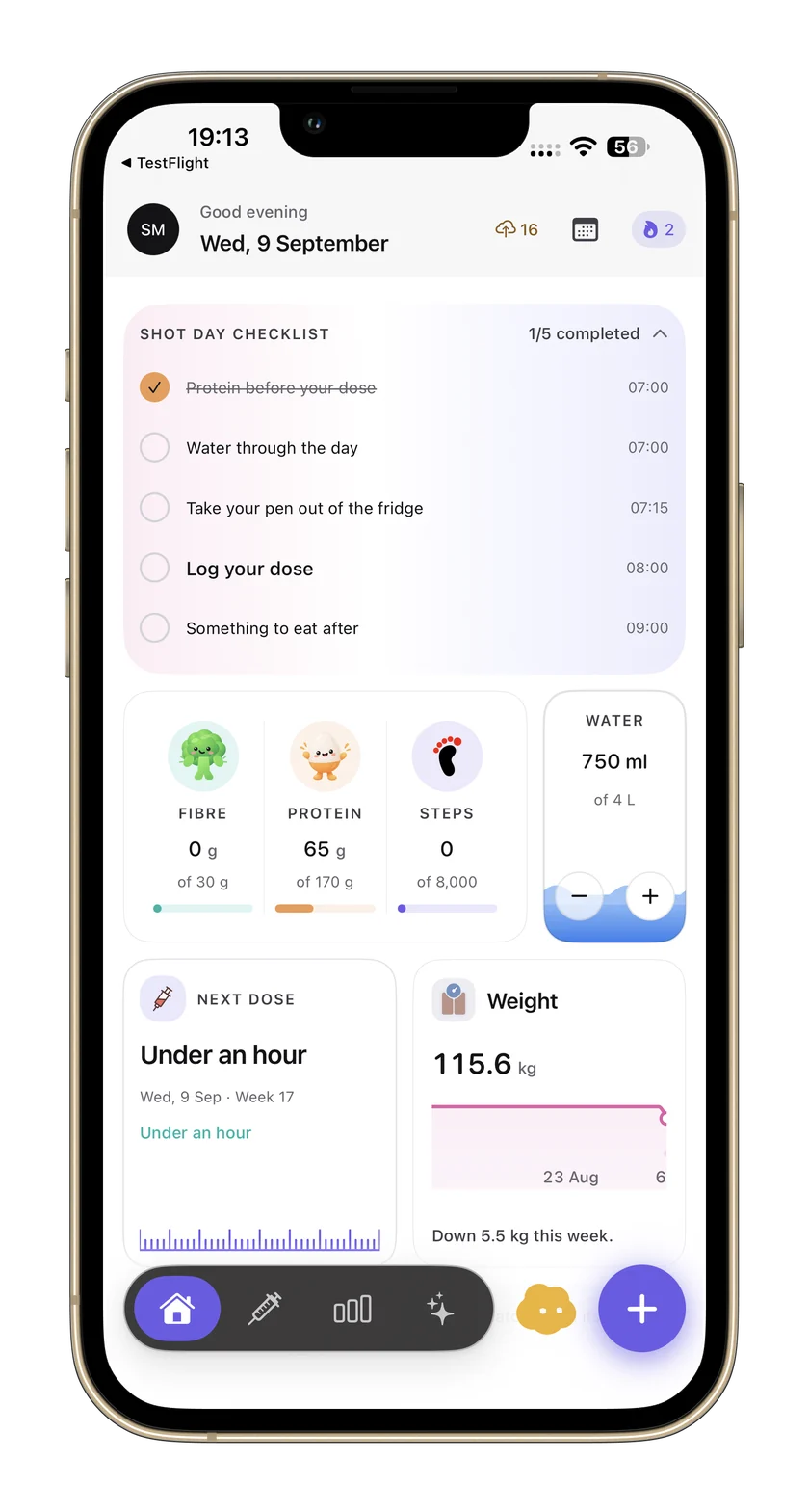
Cafeity keeps the dose, the site and any change of dose day on one record, wherever you are, and works offline.
Common questions
Can I take GLP-1 pens on a plane?
How long can a GLP-1 pen stay out of the fridge?
Sources
- Semaglutide injection and tablets for weight management — US prescribing information DailyMed, US National Library of Medicine, version published 30 June 2026
- Tirzepatide injection for weight management and obstructive sleep apnoea — US prescribing information DailyMed, US National Library of Medicine, version published 2 September 2026
- Dulaglutide injection — US prescribing information DailyMed, US National Library of Medicine, version published 10 August 2026
- Orforglipron tablets for weight management — US prescribing information DailyMed, US National Library of Medicine, version published 13 August 2026
- Liquid medications — what can I bring? Transportation Security Administration
- Gel ice packs — what can I bring? Transportation Security Administration
- Disabilities and medical conditions — screening Transportation Security Administration
Written by the Cafeity team from the sources listed here. Figures from prescribing information are quoted as the label states them; trial results are averages from those trials, not predictions for any one person. This page has not yet been reviewed by a clinician — see the editorial policy for how pages are researched and corrected.